Showing posts with label games. Show all posts

Sunday, 12 June 2011

Errant gaming summary part 1 - the basic model


It's been a while since I've posted anything about what I've been working on - so I thought an overview might be in order to bring things bang up to date.

The methodology I was following through the spring was something I've called 'errant gaming'. It's a way of exploring the relationship between jokes and what I'm very crudely calling anomie. By anomie I just mean zones of indeterminacy, areas outside of social norms or formal rules. And by jokes, well, the rough formulation I'm working with is nonsense that makes sense, or mistakes that work. So something crazy which seems to have coherence, or taking it less linguistically, it could be when you kick a broken computer and it starts working.


Relation between joking and anomie in two zones - detournement and errant reasoning

The above diagram divides these interactions into two 'zones'. The first is jokes as agents of subversion, of detournement. But what I want to focus on is joking as a means of dealing with indeterminacy. If you think about it, once the rules break down, nothing you do is going to be right so you need some other strategy, and joking represents one of them.


Errant gaming tries to generate these zones of anomie in game contexts, in such a way they can be resolved by the players using different means. A errant game therefore needs two properties – it needs a hole, it needs indeterminacy, but it also needs a way of being shifted or changed to run, there have to be forces outside the game you can bring in.


ANOMIE - the first errant game experiment


So my first conception of an errant game the a card game I called 'Anomie', which I described some months a go. It's a card game whose dominant feature is that playing the joker that lets you do anything. So you could burn the cards, eat the deck, whatever. And in one game where I tested it, this card really became the point of the game – no one could follow what was happening, but everyone wanted a chance to do something silly.

ANOMIE - it's all gone a bit crazy


My second experiment was quite different. It's called 'automata chess' - it's played like normal chess, but each time you take a piece you set it a rule – almost pseudo-computationally – which governs its movements. They're the pieces with the blue thimbles on them.

Automata Chess in action


And here are the rules at this point.

Automata Chess with overlaid rules


The main thing to note with the game was the sheer level of mental exhaustion caused by having to constantly invent rules – and how this caused us to start cross referencing rules in order to retain sanity.

Automata Chess with overlaid rules


Now, at this particular moment of the game we had a bit of a weird situation – I'm in check, but automata 1 will block my check at the end of the move. So do I have to move out of check? We had no way of resolving this, and in the end had to resort to a randomised system – guessing what colour counter was in her hand.

Those two, and other minor tests, constitute what I call the basic model for Errant Gaming. And I then moved to working on the temporal model – which is an attempt to introduce this indeterminacy into game time. Why the shift to time? Well, I'll explain later...

Saturday, 30 April 2011

Portal 2 and Computer Games as Art


Although I've had a deeper-than-average affection for computer games for many years now, my commitment to poetry still runs deeper. How can I tell? Well, apart from the fact that I gave up designing Duke Nukem 3D levels and Klik n' Play games and started writing poems, there's the debates within each medium's respective communities. I feel compelled to get stuck into the wranglings regarding prize culture, mainstream/non-mainstream poetry, publishing, audience expansion etc. You can see how worked up I get about those things right here on this blog. I feel that stuff is important.

The kind of arguments that crop up around gaming, however, more often than not just leave me baffled and disillusioned, images of petulant, whiny geeks swimming around in my head. Take Portal 2, which, as far as I'm concerned, is the latest surefooted step towards making interactive storytelling the artform of the future, as well as (along with its predecessor) a significant stride away from games as a primarily male-orientated, borderline mysogynistic medium. I'll be fair and say that most of the thick-as-pigshit responses to Joe McNeilly's feminist reading of the original Portal (sample: "And since when the fucking hell have guns been phallus-like?") are far from representative of the gaming community. In fact, I would say that the eagerness, both on a popular and critical level, to embrace both games comes not only from an appreciation of their technical qualities but also from a genuine hunger to move in a socially inclusive direction. Gaming, just like poetry, is at war with a debillitating image of itself. Just as poets are loser musos fortifying university literary departments, gamers are overweight single men trapped in dark boudoirs. Normal people in both groups face the double antagonism of lazy stereotyping from outsiders and mutated forms of macho posturing in their own camp (for poets, it comes in a variety of forms; for gamers, it's usually Mr "Game is too short and easy - I finished it in forty minutes while replaying Half-Life 2 with my other hand".)

Nevertheless, I find myself asking: what do Portal 2 players think they're achieving by complaining that they have to pay extra if they want to unlock virtual comedy hats for the robots? Or by whining that the PC version might have been developed as a port of the console versions? In their droves, by the way - so much so that gaming blog RockPaperShotgun felt compelled to post a careful refutation of the various petty accusations that have been levelled against the game. I've tried, with little success, to understand exactly what the problem is with selling people downloadable extras on top of the original game. Supposedly, it's 'immoral', it's evidence of the developers not working hard enough for their money, it's time they could have spent making the main product more watertight and so on. Really, though, I think it comes down to this: many gamers are rampant completists and their dealer keeps raising the price of their addiction. They don't want to pay $5 for a silly hat but feel bizarrely compelled to.

There is an argument that modern games, which have replaced high score tables with percentage complete bars, lists of achievements to tick off and unlockable extras, encourage a completist attitude. But really they're just giving old schoolers a nicotine patch to help them cope with the transition from games as contests of skill, with empirical or quantitative measures of success, to a medium-cum-artform that seeks to satisfy and enrich emotionally and intellectually, non-quantifiably. Particularly in a country like Britain, where the arts are increasingly asked to come up with figures to prove their cultural value, it's a real positive that mainstream games which sell in their millions are being pushed in this direction.

In Portal 2, none of the suite of pleasures I took from playing through were as a result of my own proficiency and game-playing competence. In fact, one of the reasons I rarely got annoyed with the game is that it's built with the idea of constant learning and progression in mind, rather than forcing you to repeat the same tasks again and again until your fingers learn the right twitch patterns. I enjoyed cracking the puzzles because the results involved devious manipulations of space and physics, as well as defeating lethal turret guns with nothing more harmful than holes in the ground and blue paint. The game tests you intellectually without demanding you develop yet another non-transferable expertise, and rewards a furrowed brow with the kind of entertainment that delights the grown-up child in any of us. It teaches you to think laterally, and to meet force and apparent gross unfairness (as well as misuse of power) with cunning thought and resourcefulness.

I also enjoyed that rarity in interative narration - a story with plenty of twists and turns that never feels like it's trying to tell you to be serious and stop mucking about. Whereas in a game like Halo 3, the most fun I had was at the developers' expense - by bludgeoning soldiers who were supposed to be on my side and watching them consistently react as if it was an unfortunate accident - Portal 2 marries up the player's aims with the protagonist's so successfully that you genuinely want to do what's expected of you: solve the puzzles, upset the gun turrets and break out of the facility. There are parts where I would have wanted to drive a harder bargain with either of the neurotic AIs that partner up with you, but they were never less than useful to have along.

The story is also extremely witty. I'd go so far as to say it borders on Vonnegutian. Portal 2's dialogue and visual black comedy shows up nearly every other future sci-fi dystopia game I've played as the humourless, intellectually arid bag of cliches it really is. It's the kind of game you want to play with other people just so you can share the most beautifully scripted (and voiced) moments.

Talking of playing with other people, I haven't had the chance to start the co-op mode yet, which lets you and a friend solve test chambers together. If games can continue in this direction, it will draw a line under the stereotype of the antisocial bedroom dweller forever. It's not hard (although rather painful) to imagine this sort of technology being used to train employees in basic trust and collaboration skills.

The computer games as art debate is well rehearsed; as sympathetic as I am to the medium, most of the arguments in favour of its acceptance as an artform could be applied to, well, football or gardening, ie. it's immensely inspiring and gratifying to see an intricate thing done spectacularly well. That's all very well, but we still need the kind of high art that provides the fuel for break-out thinking and grass-roots solutions to social problems that politics avoids addressing. Based on the general behaviour of gamers that I've come across, we're not there yet, but there's certainly hope. And that's of interest to poets to because computer games might be our last, best hope of maintaining an awareness of and connection to art within the disenfranchised, systematically betrayed and aggressively consumerfied generations currently growing up.

Monday, 11 April 2011

100 Word Review - Transformers: War for Cybertron (PC)


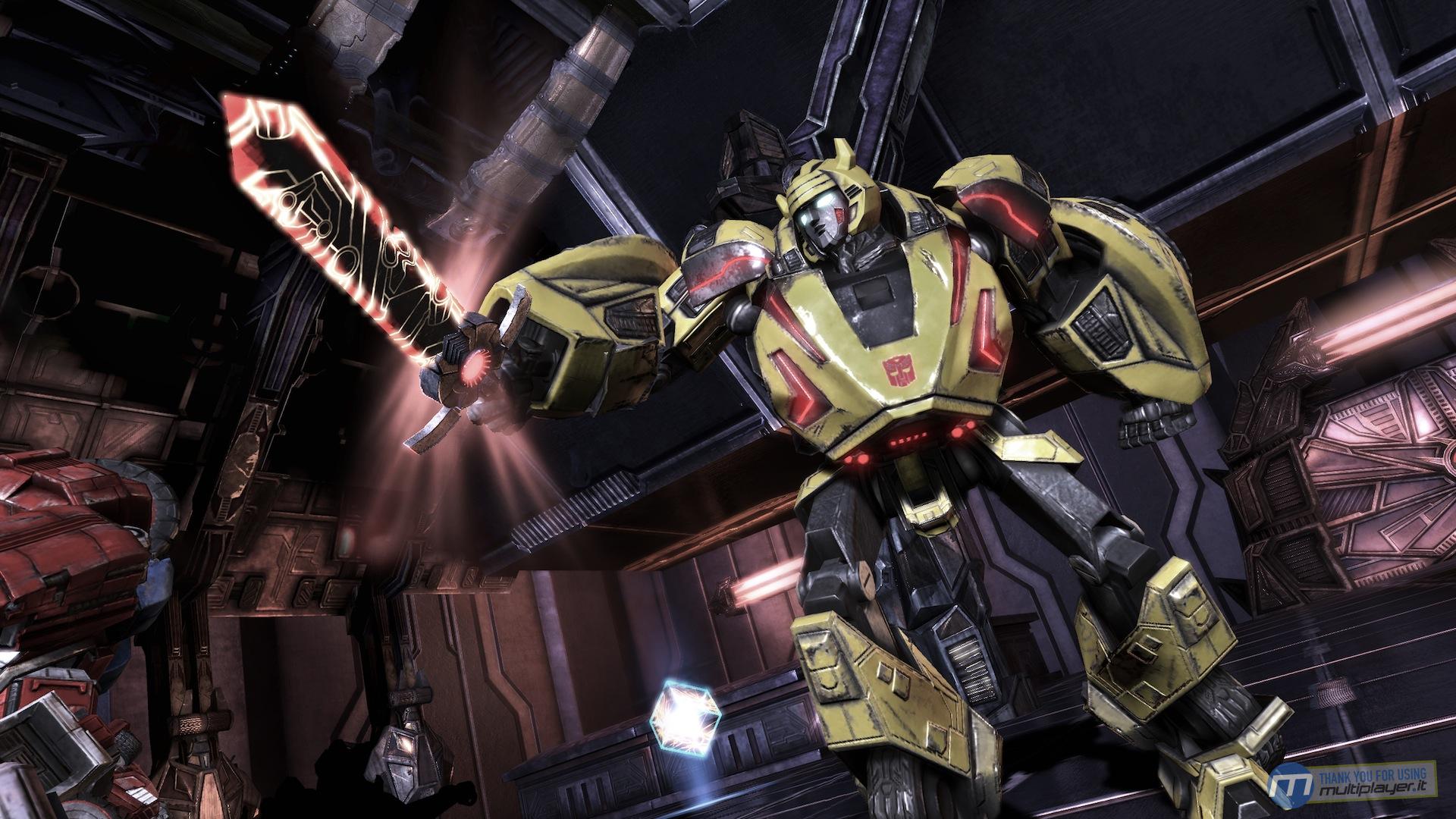
Transformers disappoints in yet another medium. If most games are a series of repetitive actions masked by a veneer of original spectacle and narrative purpose, then at best, TF: WFC needs a slicker veneer, since it soon sinks in that all you're doing is following an arrow and shooting down the same four enemies. The transforming gimmick is wasted – cars either handle exactly like robots or nitro-blast forward uncontrollably. The range of familiar characters is sparse and all are very much alike (Bumblebee doesn't spy; he slaughters), while the constant reliance on ammo-respawn points near bosses is woeful design.

Friday, 1 April 2011

100 Word Review - Half-Life 2 (XBox 360)


Alas, this hasn't aged very well. Back in the day, it was getting marks of 11 out of 10 and being cited as the greatest game ever. But whereas the original Half-Life remains a masterclass in spare and sure-footed narrative-driven gaming, its sequel is an awkward sprint from one infodump to the next. Characters stubbornly refuse to come to life and the now-not-that-impressive physics puzzles are somewhat crowbarred into frantic chase/escape scenes. The pacing is still strong and the multi-dimensional dystopia well realised, but it simply doesn't stand up to more recent games in the way true classics should.

Monday, 28 March 2011

100 Word Review - Batman: Arkham Asylum


A rare example of successfully integrated narrative and superb voice-acting, Arkham Asylum is a blend of gameplay styles that pits Batman's blunt tenacity against the Joker's months of planning and gift for murderous improv. Over the course of one brutal night, you play sleuth, pugilist and shadowy predator, armed with stunts, toys and a fluid and responsive control system that makes a little skill go a long way. Arkham itself is rich in detail, variety and monstrous atmosphere, and although most of the boss fights are tedious throwbacks, defeating the Riddler and Scarecrow at their own games is hugely satisfying.

Monday, 28 February 2011

100 Word Review - Broken Sword 4


Since it manages to pack in all the worst and best elements of the point & click genre, it's hard to summise my feelings for BS4. The plot is engaging Templarballs, George and Nico make a lovable pair of hapless protagonists (particularly George, who always reacts to danger with good-natured joshing), the controls are intuitive and many of the puzzles are tough-but-satisfying. But progression is frequently blocked by a poorly thought out events tree that has you scouring walkthroughs to find out, for example, how to correctly sign a photograph. Also, too many minor characters are idiots.

Friday, 25 February 2011

100 Word Review - Octodad (PC)


Really digging these shorter games at the moment – just the thing for when you're too busy for interactive pseudo-epic dark fantasy novels with polygons. Octodad takes about 20 minutes to complete and sees you playing an octopus trying to pass himself off as a suburban family man. The player controls each limb independently, trying to make him walk, tidy, wash up, run obstacle courses etc without looking too rubbery. The humour is pitched perfectly, as wife and children raise suspicious eyebrows and a maniacal sushi chef attempts to flush you out of hiding. The final challenge? Climb a stepladder.

Wednesday, 23 February 2011

100 Word Review - Goldeneye 007 (wii)


I never liked the original, you know. The multiplayer seemed drab and sluggish compared to, say, Shadow Warrior on the PC, and the single player not a patch on MDK (or, in the year after, Unreal and Half-Life). This reimagined, Daniel-Craig-ified Goldeneye is still drab and sluggish but the refined controls make for an intense, often-hilarious deathmatch. To wit, if you don't press Z to peer intently through your sight when pulling the trigger, your gunfire sprays everywhere, meaning you have to be the cat in each cat-and-mouse confrontation or else dance around like an imbecile. Sniping is satisfying too.

Monday, 21 February 2011

100 Word Review - The World Ends With You (DS)


Following the obsessive commercialist accumulation of Pokemon (“gotta catch'em all!”), The World Ends With You takes the CRPG to its logical conclusion and sets it in a cosmopolitan shopping district. You're one of many teenagers trapped in an parallel Shibuya, forced to play a mysterious game or be 'erased'. Might sound like watered down Battle Royale, but it's so packed with ideas I didn't care. When not engaged in its intense 'stride cross' battle mode, naturally you'll be shopping. My inventory could illustrate Marx's opening to Capital. Why buy so much? Because if you don't THE SHOPKEEPERS WON'T LIKE YOU.

100 Word Review - Façade (PC)


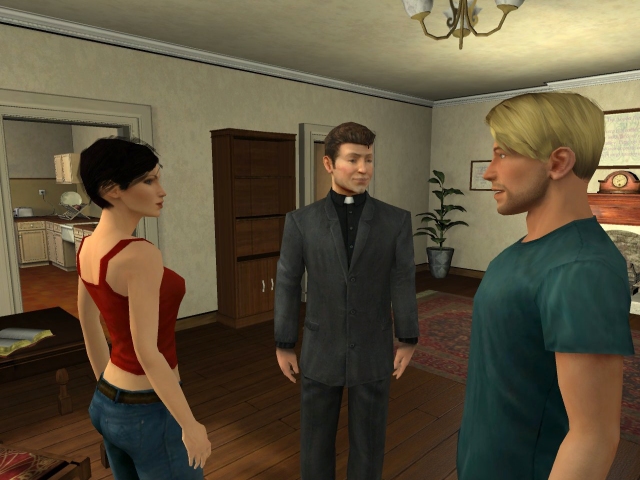
This five-year-old interactive one-act play was once hailed as “one of the most important games ever created, possibly the most important game of the last ten years”, chiefly because events in Façade play out with or without the player; you are there simply to nudge a bickering couple in the direction of reconciliation through minor actions. Alas, you need to play through so many times in order to learn how to do this (it makes no intuitive sense) that the experience becomes Groundhog-Day-ish – eternally trapped in dull conversation with a pair of infuriatingly fickle and self-obsessed American AIs.

Friday, 18 February 2011

100 Word Review - Sonic Colours (wii)


I don't know why everyone is calling this a return to form; Sonic has been going strong as a 2D platformer on the Gameboy Advance and DS for years. If this game represents his non-portable console comeback, however, then colour (arf!) me impressed. It takes a little getting used to, but as there's an emphasis on repeating levels for bigger scores a la Angry Birds, we can forgive the learning curve. As spectacle, it's ravishing and full of life – particularly the Japanese-themed aquatic levels and zany power-ups. No worthwhile two-player though, and rather too much lip from Sonic himself.

Monday, 14 February 2011

100 Word Review - Muramasa: The Demon Blade (wii)


The only major let-down in this supremely beautiful Muromachi/Edo-era Japan-themed slash'em up is the lack of a two-player mode. You get two characters – amnesiac samurai Kisuke and demon-possessed princess Momohime – but their stories are played through separately, only interweaving in the hot mountain springs where they briefly meet. Other than that, it's boldly, brilliantly animated sword combat with obakemono, ninja, monks and samurai set in rolling meadows, rivers, towns, mountains and bamboo jungles, interspersed with levelling up, forging more powerful blades and, most charmingly, cooking and eating delicious-looking food a piece at a time, replete with curling steam.

Thursday, 3 February 2011

ANOMIE: a game for four or more players


'Anomie' is an experimental card game I’ve developed as part of my project examining jokes as disruptive agents in social relations. It looks at what happens when you incorporate a zone outside of the rules of the game into the rules of the game itself. I’ve tried it with three groups so far, and so I’m throwing it out into the internet ether in the hope people might give it a go and let me knows what happens!

As it happens, the game itself tends to be pretty anarchic, partly because it is a bit complicated and very hard to tell what’s going on in the game, but also because of the powers given to the Joker card. It tends to get a little silly as well. I would recommend using a deck of card you wouldn’t mind, say, seeing physically destroyed.

The rules are below. The game is an experiment and is very much in development, so thoughts, feedback, ideas, feelings, experiences would be brilliant. Also let me know if anything is horribly ambiguous, then I will amend the below accordingly.

Set up
At the beginning of the game, the two jokers are removed from the deck, and each player draws a card. This card becomes their objective card. The jokers are then added back in, and all players then draw a further 3 cards.

Sequence of play
The game progresses by each player taking turns to lay cards face up into one of two piles - an IN pile and and OUT pile, and then taking another card from the main deck (which is face down). The aim of the game is to get as many cards with the same suit and rank in the IN pile, and as many cards of the opposite colour in the OUT pile. The composition of these piles determine the players score at the end.

The game ends when all cards have been played into either the IN or the OUT pile.

To make it a little easier, I've made a little print out game board which shows you where to place the cards. Completely non-essential, but might prevent initial confusion.

Special cards
If we left it at that, the game would proceed via mere luck. But all the picture cards (Jack, Queen, King, Ace and Joker) all have special powers as described below.

Jack: Allows you to take the top two cards from the opposite pile to which you've played it. So if you play a Jack into the IN pile, you can take the top two cards from the OUT pile and place them in the IN pile as well.

Queen: Make another player pick up 3 cards from the opposite pile. So if you play this in the OUT pile you can make another player pick up the top 3 cards from the IN pile. The player who picks up the cards carries on as normal, but won't pick up an additional card on their go until they are back to three cards.

King: Force any player to swap their objective card for another card. First they discard their objective card(s) into either the IN or OUT pile, face down. If there are cards left in the main deck (i.e. that haven't come into play yet) then they have to take the first card from the main deck. Otherwise, whoever played the King picks a card from their hand at random - this becomes their objective. (Note that you cannot make a player with no cards change their objective)

Ace: Force another player to discard their entire hand, face down, into either the IN or OUT pile at your discretion.

Joker: This is the fun one. This gives a complete free move. What does 'free' mean? Exactly what it says. You can do anything. You can seize another players hand, you can give yourself twenty objective cards, you can throw the IN pile out of the window, whatever you want. There are logical restrictions though: this is a free move, not a series of free moves. Whatever you do has to be defendable as a 'move'. And I guess really it shouldn’t result in the joker you've played ending up back in your hand (the other joker is fine however). Apart from that, you can do whatever you like.

Scoring
Once the game is over, everyone shows their objectives. You then need to go through the IN and the OUT pile, and allocate points to player as follows (it helps to have a bit of paper to do this!)

The IN pile:
- for each card of the same suit as the player's objective: 1 point.
- for each card of the same rank as the player's objective: 3 point.

The OUT pile:
- for each card of the same colour as the player's objective: -1 point.
- for each card of the same rank as the player's objective: -3 points.

Variants
I’ve not tried most of these - really they are ways of getting you to mess with the games rules just to see what happens.
  • If you have a large group (6 or more) try having two decks in play.
  • For more tactical play, instead of placing cards into a single pile, lay the IN and OUT cards as you would in solitaire, allowing you to see the entire composition of each pile.
  • With the above variant, have it so the Jack and the Queen can take any continuous set of cards, and not the last two or three played.
  • Experiment with changing what you can do with the Joker - for instance, have it so you can do anything for 10 seconds rather than a single free move.
  • Try setting secret objectives other than getting the most points - e.g. (1) make all players including yourself end in negative points (2) make the player next to you get the least points (3) attempt to get at least two thirds of the other players to achieve their secret objective (4) be the only player in negative points and so on. I’m going to make a deck of these you can print at a later stage.


Creative Commons Licence

Sunday, 9 May 2010

100-Word Reviews: Kororinpa and Shadow Dancer: The Secret of Shinobi


Copies of this four year old Wii game take up a whole shelf at my local Blockbuster. I’m guessing that’s because it was a popular renting title - which makes sense, as it’s a thoroughly entertaining game that only takes two or three dedicated evenings to complete. Think of a colourful, increasingly complex, virtual version of a marble-rolling maze game; you tip the Wiimote this way and that in order to tip the whole gaming world this way and that, causing the marble (or watermelon, or football, or sphereised penguin/panda/kitten) to roll. Surprisingly addictive, compelling, tricky and inventive.

Additional notes:
£10 in Blockbuster! Probably cheap as chips on ebay. Only for Wii.


Shadow Dancer was the third Shinobi game to be released on the Mega Drive, bizarrely preceding Shinobi III: Return of the Ninja Master by three years. Originally an arcade game, it puts you in the role of a shuriken-happy ninja (his name varies between versions) trying to thwart a terrorist plot by rescuing hostages and defeating a variety of enemies (as you do). The key feature that distinguishes it from other Shinobi titles is your white dog, who can be commanded to maul enemies, setting up a diverse range of tactics. This alone makes it worth a quick blast.

Additional notes:
£5.60 on Wii's Virtual Console (800 points). If you have an old Mega Drive, you can get it for roughly the same amount on ebay, give or take a couple of quid.

Saturday, 13 March 2010

Tomb Raider Anniversary, 100 word review


If you, like me, cooled to Tomb Raider at around the turn of the century, when each consecutive game seemed to contain less and less new ideas, then 2007’s Anniversary is your way back in. The pop culture analysts have long since moved on to fresher territory and Lara is back to doing what she does best: navigating giant, three-dimensional puzzle blocks cleverly disguised as beautiful exotic ruins. In this respect, TR is better than ever. The controls are also hugely improved, although the combat is still fairly dull, the camera still problematic and the occasional section infuriatingly fiddly.

Monday, 8 February 2010

Lego Batman, Wii, 100 word review


Some people think gaming should be about the challenge. Others prefer stress-free fun. Traveller’s Tales Lego games are expressly designed for the latter. You can’t ‘die’ and you’re unlikely to get stuck on any part of a level for a significant amount of time. Instead, the emphasis is on using charming Lego renditions of famous heroes and villains to batter everything in sight and collect bucketloads of woot (with deviations into simple puzzles). Sounds repetitive, but the huge roster of characters, amusing special moves, colourful comic book levels and super-gadabout vehicles keep the grin plastered to your chops.

Sunday, 7 February 2010

Bleach: Dark Souls, DS, 100 word review


Best beat’em up on the DS? Probably. But even better for those who have flirted with the property it’s licensed from. Like me, you might not have read any Bleach before encountering the game - your interest being aroused instead by the pedigree (developers Treasure are responsible for classics across nearly every platform of the last fifteen years). But get to know the characters a little, and it’s even more fun pitting them against one another. Four-way matches, extravagant costumes, screen-swamping special moves, lovably pompous fight-talk, plus a story mode - all makes for an engaging five-minute bash.