Thursday, 6 October 2011

It's National Poetry Day


We've had our heads buried in so much work that I didn't pick up until three days ago that the theme for National Poetry Day this years is games.

What an oversight! Especially as one of the projects we've been trying to draw together is Coin Opera 2, a whole anthology of poems about computer games, and especially as we're only just past the 40th anniversary of the first coin-operated video game being installed at Stanford University (Galaxy Game, if you're wondering).

So even though we were utterly unprepared, we couldn't let the whole thing just pass us by. Insanely overambitious as it was, I accelerated a little side project that was intended as part of Coin Opera 2 and have spent the last few days staying up late to try to finish 41 short poems, one for every year since the unveiling of Galaxy Game, each based around a game released that year. Oh yes, and they each subscribe (with some room for manoeuvre) to the most pointlessly difficult form I've ever invented.

I crawled across the finish line last night at around 3am, and hence today I am shattered and broken, but able to digitally publish the whole sequence. It's called Treasure Arcade and you can download the full pdf from the Sidekick Books site. In the mean time, here are are a few of my favourites:

1976
Colossal Cave Adventure
You are in a twisted lip.
You are on a lip of ledge, a little twist of ledge, before a deep pool.
You are in a pool of passages, an inverted brain, a cave-cool lap.
You are lip-deep in a loop of cool lip, on the brain’s ledge of sleep.

1982
Dig Dug
Hori Taizo! How dare
you dig up my land again! You plan it as if it were a night-time raid,
arrive with your makeshift harpoon and a tank of oxygen-rich air.
But there are no dragons buried here. Go spade your own hectare.

1985
Where in the World is Carmen Sandiego?
In bed, Carmen smokes
a red cigarette, claws for her red knickers, leaves reedy red marks
across your back. The dawn is meat-red, and there is even beauty
in how she stokes the cabin fire to red sparks, her hair slightly sooty.

1990
The Secret of Monkey Island
We who went a-roving,
lean for the sweet trade, all of us foundered on the garnet-haired governor,
her brazen calico, who left each heart a capsized coracle, each body
run through with loving, every rum cove and ravener drunk for her custody.

1993
Gunstar Heroes
Me and my brother
mixing rare gunpowders – letting the various chemistries breathe.
The shafts they’ve bored are veined with rails and heck-deep,
but we were born to scupper. We seethe with colour and lack of sleep.

2009
Muramasa
I’m thinking of our shared
furious flush in a mountain spring that steamed like boiled radish
the second time we met, me with my memory a shorn stem,
you with your girlish bottom bared and reddish, each wound a diadem.

2010
Angry Birds Seasons
Night and day and night,
they blitzed the weakest joins of the house, leaving it scare-torn
and clotted with powder down, us scrummed, half shaken apart.
Rage made them bright. Greed had drawn us like an applecart.


Sunday, 25 September 2011

Free Verse Poetry Book Fair Report


Yesterday Charles Boyle of CB Editions, along with Chrissy Williams and Anna-Mae Selby, hosted a remarkable event, which we were lucky to be part of.

The Free Verse Poetry Book Fair, which was held in the beautiful Exmouth Market area of London, was a fantastic opportunity to see exactly how active the independent poetry publishing scene is. Over 20 presses took their places at tables around a buzzing hall, while, upstairs, readings took place throughout the day. Helena Nelson, head honcho of Happenstance, very kindly invited us to share a table and show our literary ankles with Sidekick Books publications. This is me meddling with the books:


Jon and me, while officially there wearing our Sidekick Books hats, read for Happenstance, who published Jon's debut pamphlet Scarecrows in April 2010 and mine, What To Do, in July 2011. Other readings came from Penned In The Margins (see Tom Chivers' write-up of the event here) and Nine Arches, among others, and Michael Horovitz opened proceedings with poetry, kazoo, a spot of Johnny Tillotson and a call-to-arms in support of fostering independent approaches to poetry.

Also great to have Andy Ching, boss of Donut, as a neighbour, though I could feel the special edition of Tim Turnbull's Caligula On Ice tugging at my wallet the entire day - probably the best looking stall in the joint, which is no mean feat.

As an added bonus, Jon got to have a Roger Moore-style eyebrow-raising contest with Donut poet Wayne Holloway-Smith's baby daughter Margot. Either both won or both lost, but either way it was a tenaciously-fought duel.

Oh yes, and check out Jon's spoils (including the copy of the gorgeous Salt Book of Younger Poets, which I snaffled on Friday at the Best British Poetry 2011 launch):


Here's to the next one, eh?

Friday, 23 September 2011

Poetry Book Fair!


Sidekick Books will have a stall at this amazing mammoth event tomorrow, which sees many of the poetry world's small presses joining together to promote their wonderful wares:


Free Verse Poetry Bookfair
Saturday 24th September
10am-5pm
free entry
Exmouth Market Centre
24 Exmouth Market
London EC1R 4QE
www.cbeditions.com
 
Opened at 11am by Michael Horovitz

Publishers:
 Anvil / Arc / Carcanet / CB Editions / Donut / Egg Box / Enitharmon / flipped eye / HappenStance / if p then q / Nine Arches / Penned in the Margins / Poetry Book Society / Rack Press / Reality Street / Salt / Shearsman / Shoestring / Sidekick / Ward Wood / Waterloo / Waywiser / zimZalla

Readings throughout the day:
10.30-11   Ward WoodSue Guiney and Peter Phillips    
11-11.45   Michael Horovitz
12-12.30   HappenStance Press 
Jon Stone, Kirsten Irving, Lorna Dowell, Peter Daniels, Clare Best and D A Prince
12.30-1  Nine Arches Press
Ruth Larbey and Matt Merritt
1-1.30   Reality Street
Jim Goar and James Davies
1.30-2   Rack Press
Roisin Tierney, Nicholas Murray and Katy Evans-Bush
2-2.30   CB Editions
Christopher Reid and Nancy Gafford  
2.30-3   Carcanet
Will Eaves and Ian Pindar
3-3.30   ifpthenq
Lucy Harvest Clarke and Tom Jenks
3.30-4   Flipped Eye
Max Wallis and Kate McLoughlin
4-4.30   Penned in the Margins
Gemma Seltzer and Siddhartha Bose
4.30-5   Waterloo Press
Jeremy Reed, Niall McDevitt and Philip Ruthen

Contact info@cbeditions.com for more information.

Tuesday, 6 September 2011

I should have mentioned!


The Lifelines LinkEthiopia event went rather well. We raised over £200 for a worthwhile and genuinely hard-working charity. Headliner Lemn Sissay went down a storm and sold a whole stack of books to a smitten audience. I made substitue tej and ful, and we brought some extra bits and pieces from Addis near King's Cross. All eaten up.

But how is it I always end up with a stack of flyers left after these events?

September Update


About four or five posts ago I made some kind of promise (to an unspecified person - possible myself) that Contraption would be out in August. Well, about a billion things got in the way. I hate promising myself things. Two days ago, Kirsty did a simultaneous edit of all three versions (web, e-book, hard copy) and made numerous necessary edits. We did finally get hold of a printer that (thus far) works, but I have already put plan B into action, which means we're going to send off a pdf and get the pages printed and cut by a third party. We'll then do the binding and covers ourselves, as usual.

There are at least two more very exciting things to come from Fuselit/Sidekick Books in September - in fact, they're somehow more finished than Contraption, but I'll hold off on the details until we've got everything ready. Hopefully not too long!

In the mean time, this is the Best British Poetry 2011, just published by Salt:


It has a poem by me in it, but more importantly it has a poem from Fuselit in it! Richard Osmond's 'Logo' was from our last issue, Jack, and is a really brilliant little piece. At a tenner full price, and featuring a really varied array of poets from a slew of British journals, the whole book is a bit of a steal. Take that recommendation with however much salt you like, but know that I genuinely have difficulty enthusing about anything I'm associated with that I can pick holes in ...

Wednesday, 31 August 2011

Manifesto!


One of the things I'm trying to fit in at the moment (and a weekend break gave me a good time to ponder it) is a manifesto for Cake magazine, run by Andrew McMillan and Martha Sprackland. A manifesto is exactly what I need to get down on paper at the moment - not because of self-importance or revolutionary zeal but to help me keep a grip on what the purpose and place of all our various projects is. I hope Andrew and Martha won't mind me putting up a first draft here. I've already made a lot of notes for a second draft, and it will take a rather different tone. Ultimately, I think the oppositional stance in the first one is problematic and that it doesn't quite capture what's going on. It's also too long. Here it is anyway, as something to chew over:

"When Kirsty and I talk about what we’re trying to do with Sidekick Books and Fuselit, and with our own writing, the words I’m most sick of hearing myself repeat are ‘collaborative’ and ‘engage’. These are positive, active, optimistic words that seem to fit the enthusiastic tone I want to strike, but our work is probably better defined by what we’re against.

"We are anti-specialist; that is, against adages like ‘write what you know’ and ‘stick to what you’re best at’, or any philosophy that drives a kind of self-ghettoisation - limiting oneself increasingly to one’s strengths and areas of expertise, creating an environment where the individual avoids straying into a field in which they might be shown to be ignorant or incompetent. In terms of poetry, this means we are against a poetry that only looks inward - towards other poetry - to measure its success, the belief that a poem can be good merely because it is like other good poems, or because it is the next step in an assembled narrative of poetry.

"We are anti-‘universal’. That is, we don’t believe in the concept of a poetry that speaks to everyone. There are some poems that are for some people and other poems that are for other people. Not as clear cut as that, of course, but in general, we distrust attempts towards the definition of a ‘human condition’, or any claim that a poem is characterised by a lack of cultural specificity, entirely inclusive, cleansed of any target demographic.

"We are anti-saviour, or, if you like, pro-ensemble. In other words, we reject the narrative of the genius or fated leader who defines their generation (in marketing terms, ‘the next big thing’) and, by extension, the micro-cast of significants - the artistic hegemony. We believe damage is generally done to our poetic culture by forcing a narrative of progress (replete with ‘key figures’) upon it and by searching for a way to comfortably disregard the contributions of the many in order that that narrative be easily digestible.

"What does all this rejecting add up to? It starts with the principle that the widespread practice of any art is more important to our cultural moral health than the results, that we should encourage engagement (there’s that word) over worship. More people writing is therefore not a bad thing. A lack of visible ‘stand-out’ talents is therefore not a bad thing (and no more an indication of a lack of generational talent as it is an abundance of it). Diversity is to be valued over authority. A masterpiece is just a creation of critics and readers in search of a measuring stick.

"It also shares some of the character of the Scottish informationist movement of the 90s, in that we favour a ‘crossing of wires’. We think poetry should be reaching outwards and across, that good poetry is always defined by its connection to something outside of - as well as within - the poetic canon. We think it should engage (again) freely with all the various strands of other lexicons, jargons, histories and subcultures, rather than striving for a kind of blank-slateness or nothing-and-everything appeal.
 
"We favour the idea that poems - and people - exist in overlapping groups which we move freely between and among. Thus, a book of poems and illustrations celebrating British birds is designed to exist at an intersection of different groups, to facilitate the flow between them. Fuselit, which started it all, uses a single word as a hub, with the idea that poets and other artists come to us from different directions - their personal pathways crossing at the point where an issue is created. All organisation is, essentially, in flux, and loosely defined, and largely non-hierarchical. Rather than celebrating trends or defining moments in poetry, we believe in placing the emphasis on the individual character of a work in the context in which it appears. A practical example of what this means would be that there is nothing ‘lesser’ or easily dismissible in a strong or interesting poem written by someone who was only testing out poetry before moving onto something else. With Fuselit, we have been very happy to catch these occasional oddities and place them alongside the work of those who go on to publish pamphlets and collections.

"In some ways, it is a response to the dilemma of cultural fragmentation, but while the conservative reaction to the same problem is ultimately backward-looking - a vision of reintegration, repairing of boundaries, pruning back of individualism - ours is an attempt to find some kind of harmony with it. We are frequently presented with the false choice of socialism versus capitalism - either everyone (and no one) is special, or natural selection must weed the weak from the strong. What we suggest instead is that on both a social and artistic level, people’s work must be viewed in terms of these overlapping groups, and the meaning of their work must be understood first in relation to its place in their extended families or spheres, rather than how it fits in with the whole, messy, irreducible formula of a whole generation or era. There is room then for everyone who has a serious commitment to being involved. Members of an audience are, on another night, in another context, the figures on the stage."

Tuesday, 30 August 2011

Literary Treasures from Derbyshire


I've just returned from a second foray into my native Derbyshire in two months (once on the annual holiday, the second time to visit my grandparents) and feel I should report on the rich poetical discoveries that eventuated from various trips to bookshops.

We went twice to beautiful Scarthins in Cromford, being as it is my favourite bookshop in all the country. Not only did they agree to stocking a few copies of Birdbook, but I uncovered and purchased the following items:


white peak/dark peak is "an audio-visual world-map of The Peak District National Park" written by Alec Finlay and numerous collaborators, with the book acting as a catalogue. It contains Japanese renga and numerous concrete poems (resembling fragments of ordnance survey maps) along with details of the locations to which the poems correspond. The audio part of the project is online, and can be accessed with most mobile phones (though not Nokia N8s, as it turns out) using QR reading software; that is, you point your phone's camera at one of the 20 matrix barcodes and it should access and play the accompanying audio file.

The overall idea seems to be that you go to a location and listen to the poem that was composed in those surroundings, then perhaps write your own. It's an ambitious, inclusive and intriguing project and I warmed to Finlay's introduction, where he states:

"In an age in which plinths are crowded, bronze scarce, poetry proposes itself as the ideal form of public sculpture."


For Years Now by W. G. Sebald and Tess Jaray cost me a mere £3. Despite only containing 23 very short poems, it's a fairly chunky book, fleshed out with abstract illustrations by Jaray that are either beguilingly simple or something like Christmas wrapping paper, depending on your perspective. The poems are likely to be equally divisive. The title one goes:


For years now


I've had this
whistling
sound in
my ears.


W. G. Sebald was a lecturer at UEA during my first year there. I attended a couple of his lectures and read Rings of Saturn, just like everyone else on my course. His death was one of those events that left me unsure as to exactly how I should feel or respond.


All I know about Keston Sutherland is that various non-mainstream poets regard him as something of a luminary. Actually, that's not true - I also know, from reading this, his fourth pamphlet, Lidia, that he's a Prynne disciple and very probably studied at Cambridge. So far I have the same mixture of frustration and fascination I experience with a lot of non-mainstream British poetry, ie. it's fragmentary and inconclusive, with flashes of lovely phrasing. Still, £1.50 for a pamphlet from 1996 is always worth a punt, eh?

Moving on to The Bakewell Bookshop, where I picked up Zoe Brigley's The Secret:


Full price this time - but I've been wanting to read it for a while. I also wanted Kirsty to like it, since she's sometimes pessimistic about the number of good female poets around as compared to the male ones. Unfortunately, the book hit three immediate stumbling blocks in earning K's admiration: extensive notes (including the to-be-avoided phrase "As a writer ..."), flowery fonts (used in the last section for dialogue) and ... actually, I forget what the third one was. So the jury is still out!

For my part, I really like some of the poems (including 'Assassin' and 'Saboteaur') but I agree with what I faintly recall was a criticism made at the time it came out - that the poems feel shoehorned into an over-arcing structure for the sake of cleverness.


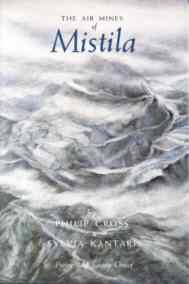
Another Bloodaxe book, The Air Mines of Mistila by Philip Gross and Sylvia Kantaris is currently out of print and must have been lingering in the bookshop since it first came out (I bought it for an inflation-busting £4.95). Tucked inside the cover, I found a faded brochure for the Poetry Book Society offering me full annual membership for £17.50 and displaying "a few of the new books offered at discount prices to PBS members during 1985-86", which included Fleur Adcock, Geoffrey Hill and Douglas Dunn, as well as a book called 'Portraits of Poets', featuring a despondent-looking Larkin squatting on the cover.

What I've read of Air Mines so far is highly enjoyable. It's of a genre that is currently rather neglected - the collaborative novella-in-verse.

Finally, I picked up this from Bookstore Brierlow Bar, a remainder bookshop near Buxton:


James freaking Sheard for £1.99. This is both a disgrace and a boon. His second collection, Dammtor, was a (requested) Christmas present last year and I was carrying it with me the day I found this. Normally I have an averse reaction to very serious brooding male poets, especially those recommended by Sean O'Brien, but Sheard has such an interesting range of settings and moods, and such skill with neat, short lines that he bypasses that part of my taste. I think he's really, really good.

Before you all run off to the Peaks to get your own copy, however, I should mention that this was the last one on the shelf. In fact, all of the above books were. You have to get 'em before they're gone. That's why I won't particularly miss Waterstones but very much hope that small, second-hand and remainder bookstores go on existing for a long time yet.

Thursday, 25 August 2011

Monday, 1 August 2011

The August Contraption Update + Poetry Library Event


The Good


The completion of the latest Fuselit yet, Contraption, is in our sights! Content? Ready six months ago. Display boxes? Check. Transparent stickers? Check. Bonus booklet ready for mass production? Check. Theme tune? Robin says he'll have it done in the next hour. Cover materials? All ready and lined up. Kindle and e-broadsheet editions? Just some gentle tweaking needed. I have set myself several missions in August, and this is the number 1 priority.


The Bad


This is Kirsty's still unfixed mini laptop, which, after a nasty fall, is missing a hinge and needs to be permanently plugged into a wall socket in order to function. It's also the only way we've been able to work on the main Contraption file, since the new computer I bought at the start of the year has had all sorts of problems running Quark. Since it's not the most powerful machine in the world and has a very small screen, this has made progress slow and difficult, particularly as the file needs to be transferred off the laptop for conversion to pdf and test printing.

In fact, so onerous has it been to continue trying to edit and fix problems this way that we're currently rebuilding the whole file in InDesign so that we can do it on the main desktop computer instead. So we've effectively made this magazine twice.


The Hideous


Here's a side-on view of the new printer we acquired in order to streamline the printing process. It was ghosting, so we bought a maintenance kit for it and replaced several parts. It then printed out a few pages absolutely perfectly (just to show that it could) before throwing up error messages. Investigations resulted in the suggestion that we buy and wire in another replacement part. This we have done, as meticulously as we could, and now when you turn it on, it fires up for a moment before dying completely.

I can't pretend I've dealt with this in the most patient manner. We have exciting projects on hand, books to write, causes to champion, poetry to review, bookshops to approach, attention to grab. Frankly, I kind of resent spending large amounts of time cluelessly tinkering with machines and posting on technical forums. Ugh.

Fortunately, I think I have a long-term solution. Will let you know if it works out.


The Event

If you want to know more about how Fuselit is put together, see a preview of Contraption at the stage we're at, or simply want to take us to task on our criminal delays, please come to Between the Sheets: How Poetry Magazines Get Made at the Poetry Library in the Southbank Centre this Wednesday from 8pm. Alongside the editors of Southbank Poetry and Modern Poetry in Translation, we'll be taking part in a discussion on ... well, what I just said. It's a free event in extremely comfortable surroundings and all the editors will be available for merciless interrogation. Huzzah!

Saturday, 23 July 2011

But can't we all just get along?


For those outside the poetry sphere, yesterday's Extraordinary General Meeting (EGM) of members of the Poetry Society was the fraught and emotional conclusion to months of upheaval, rumour and bitterness that has so far cost over £24,000 in legal fees and several people's jobs. I wasn't there, although K & I were represented by a proxy, Andy Ching, who voted on our behalf. A full summary of the whole affair as it unfolded can be read here, and a summary of the meeting at Silkworms.

If you want the super-condensed story (bearing in mind it does not give equal weight to the accounts of all sides), it is this: in April, the board of trustees of the Poetry Society went behind the Director's back, circumventing proper procedure, in order to make special arrangements to benefit one member of staff (the editor of Poetry Review). Their subsequent handling of the fallout was so incompetent that it resulted in a wave of resignations, mounting rumours of an elitist conspiracy and a legal bill that could have been cut considerably if they hadn't opted for, of all people, Rupert Murdoch's lawyers. A campaign sparked by Roddy Lumsden, but ultimately led by Kate Clanchy, gathered the support of over 400 members and eventually forced the details out into the open. The board have now resigned and will be replaced in September. They apparently see themselves as innocents strung out to dry by 'bloody unbalanced' poets. During the time in which they hoped to keep everything a closely guarded secret, other staff at the Poetry Society were threatened with the sack if they told anyone anything about it and were excluded from the decision-making process.

Behind this is the still-cloudy issue of why the editor of Poetry Review, Fiona Sampson, wanted these beneficial arrangements, ie. working from home, the option to report to the board and not the director, reduced hours. Let's take into account: (a) that her post was recently made permanent, without an official announcement, thus ending the practice of rotating editors of the journal every few years; (b) that she is a high profile poet herself who, it was pointed out by Private Eye, featured Ruth Padel in Poetry Review in roughly the same period Padel gave her a stand-up review in a broadsheet paper and was judging a prize in which she was shortlisted; (c) that she had requested these arrangements from the previous Poetry Society director and the previous Poetry Society board.

You can see, working it through logically with even a scintilla of cynicism, where the rumours of an elitist conspiracy spring from. Lacking any alternative innocent explanation, it looks an awful lot like an attempt to take Poetry Review out of the hands of the Poetry Society, which funds it, and under the complete control of the editor and her other high-profile friends, who are not averse, as we know, to a bit of log-rolling. But we just don't know for sure and probably never will.

Now, to the heading of this post.

I've noticed, over the period that this has unfolded, that one strong, sometimes wearily whispered, point of view is that this is all so much terrible hoo-hah. How hilarious and silly it is that anyone is getting their knickers in a twist over this. Or, in some cases, how deeply depressing and absurd it is that people should be getting emotional - and relationships breaking down - because of some sort of faction war or territorial conflict.

Consider the position of Todd Swift, who initially offered to stand as a proxy but withdrew, and closed his membership with the Poetry Society, because of his disillusionment with the situation. I mention Todd partly because the first time I ever saw him in the flesh, he expressed a similar disillusionment with British poetry in general, and said that he wanted to see us all put aside our differences and support each other. In recent blog posts on the situation, he has said:

"... there is nothing sadder than seeing the rebel angels (the poets) falling out among themselves."

It's easy to sympathise with this sentiment. There certainly is something terribly sad about all these events and - let's be honest - we look like chumps.

But on the other hand, it is a sentimental position to take. Poets are not, alas, rebel angels. They are human beings. And when human beings form meaningful groups, there will be friction. Where there is power, there will be the constant temptation to abuse it. Where there is kinship, there will be factionism and at least some degree of nepotism. There is no rising above it. There is no handing over the reins to sensible people who will sort everything out and leave you nothing to worry about. The only healthy approach is to have our battles out in the open, in an honest and straightforward way, and to constantly monitor the situation and check ourselves, and to never take for granted periods of relative calm.

If you see a group with a membership as large as the Poetry Society, or British Poetry in general, who are apparently united in cause and entirely friendly, all you are seeing is an effective kind of dictatorship, where the dissenters have more to gain by keeping quiet than speaking up, such is the balance of power. Think of the relationship between Murdoch and our politicians.

And yes, of course, this is far more of a serious problem when it's a structure that carries a whole society, but just because the stakes in poetry are relatively small doesn't mean this kind of thing doesn't matter on a personal level. Coindentally, this was illustrated perfectly in an episode of Dexter I was watching last night. It portrayed a social unit far smaller than a contingent of poets - a single family. On the surface, they were charitable, loving, happy. Out of sight of the rest of the world, the father was a monster.

In this case, people might not be living under the roof of a tyrant, but there are jobs at stake, as well as people's shot at a kind of self-worth and a direction. Of course there will be friction and falling out, and clashing visions, and folly. Of course.

So sorry, this is how it has to be: you have your dust-up, you take the risk of looking silly and petty, you try to learn and forgive and you move on. If you attempt to hold onto an appearance of dignity and an unblemished record, all you do is drive all that conflict into an ever more secret and soul-corrupting place, where people are quietly chewed up and never allowed to speak about it.

This is why it's entirely disingenuous of Carol Ann Duffy to state that "there's little competitiveness in the poetry world". This is why, tedious as it is, you have to bring yourself to care about the bumbling about that goes on in the shadows, and sometimes you even have to take sides, and risk looking like you've jumped the gun when the full story emerges later. In this case, if people hadn't supported Kate Clanchy's endeavours, and if people hadn't sympathised with the director of the Poetry Society to the extent of wanting an explanation, that full story might not have emerged. Sorry, but it does matter. We ain't all sweetness and light and should never pretend to be.

Friday, 8 July 2011

My July


Not me, except in the karmic universal sense.


Hello! Apologies for not having written on here for a while. I've decided to have another go at having a day job, and had entirely underestimated the amount of work that's involved in work.

Notwithstanding, I do have two noteworthy things coming up in July, and you're all invited:

Firstly, The Camden School of Enlightenment is this Tuesday 12th July. Dickon Edwards will present What's Not to Like: an Iconic Guide to Overused Words and Phrases. Richard Cole will enumerate The Seven Habits of Highly Effective Vikings. Abi Palmer will contribute What's New, Pussycat? The World of Amazon.com's 352nd-Best Reviewer, and James McKay's Dead Poet Society will honour Christopher Smart. And that's just the featured acts! we will also experience the return of Ceri May's Feltograph Corner, and pre-booked floor spots include Lions and Tigers and another installment of The Russian Revolution. It's free, and it's in Camden.

Rabbit Pie has an all-day fundraiser on Sunday 17th, 2-10pm, at The Others, Stoke Newington. I'll be doing family-friendly poems and schtick. They've got 18 acts, mainly musicians who all look far cooler than I do. In fact, the picture they've got of me looks far cooler than I do too.

Thursday, 7 July 2011

Birdbook at Betsey this Sunday!


For those who couldn't make it down to the Birdbook launch (or who could and who crave yet more birdies!), we have a slot at the magnificent Broadcast All-Dayer at the Betsey in Clerkenwell on Sunday!

Reading will be Roddy Lumsden, Isobel Dixon, Kate Potts, Edward Mackay, Nia Davies and more! We're on about 9pm but come down anytime for fantastic poetry and entertainment, as well as great food and drink.

Sunday, 3 July 2011

Early July Update


Half way through the year and not quite knocking down targets in the way we'd hoped, to put it mildly.

On the Sidekick Books front ...

We now have a distributor! Sidekick Books will be handled by Central Books, who're just down the road from us, which means we should be able to get them into more bookshops. The London Review of Books store has already sold out of their copies of Birdbook, and internet orders keep coming through. Also, the launch was a huge success, with a packed room and a jubilant atmosphere, even if I had my mouth set to 'ramble'.

We also have our first team-up pamphlet on the way. Did I mention that before?

On the Fuselit: Contraption front ...

Here are some illustrations that will go in the hard copy only, in special puzzle pages:


Did I tell you about the new printer saga? Here is the new printer saga. The printer we bought with a grant from the Forest Cafe all those years ago has long since decided to lower its quality threshold, meaning that while it's still useful for general printing, it's not up to scratch for printing Fuselit. This is something to do with the drivers. I have spent many hours replacing them with different ones, and once or twice managed to get it to return to printing high quality, sharp text, but then it rebelled and reassigned itself to different drivers. At the moment, it won't even duplex. I sent an email to Lexmark, asking for help, and was advised to go to 'Printer properties' and select 'two-sided printing'. I politely told them that of course I knew how to do this, but it still wasn't duplexing, and they've ignored all my emails since.

So for the last two issues of Fuselit we've taken to printing them at the local repro place. The problem is that the cost of this seems to vary depending on who's manning the tills. Some staff fairly take into account that we bring our own paper and knock a slice off accordingly; other ones want to charge us the full price, which makes Fuselit overly expensive to print. So we've managed to acquire instead our own high quality office printer. The catch is that we had to take one which was 'ghosting' - printing in double-vision. In order to fix this, we needed to pay a lot of money for a repair kit that may or may not fix the problem.

Guess what? The repair kit hasn't arrived yet.

Still we soldier on. Here is a corner of a mock-up we've made, sans cover, demonstrating what the stab-binding plus riveting will look like:


Six months late is our new record. What's more, like Duke Nukem Forever, I worry that progress on future Fuselits will also drag on and on as we try to keep up with newer, sparklier publications put together by more coordinated, better connected, less haggard people! We will do our best to prevent such a perennial slump in productivity ensuring.

Thursday, 23 June 2011

Birdbook Launch Tonight!


So we're finally there. The official launch of Birdbook 1: Towns, Parks, Gardens & Woodland is tonight at the Phoenix Artists Club on Charing Cross Road, from 7.30pm. We have a raft of poets reading, free pin badges to give away, some early proofs to display, a slideshow of the artwork to project, and the full range of books to sell. Lots of the artists are coming too, so looking forward to chatting with all the various contributors who came through for us on this truly collaborative project.

In other words, we've printed out a dummy Fuselit: Contraption and found that - yes! - the rivets and ribbon go well together. Slowly we inch our way towards rolling out the new, triple-format Fuselit for all to see...

Wednesday, 15 June 2011

Birdbook Poets Win Major Award


Nice headline-style heading for you there. Our newest and mightiest anthology, Birdbook: Towns, Parks, Gardens & Woodland, is already full of award-winning poets, but just to demonstrate that we aren't just picking up our leads after the trophies have been handed out, three more poets from the book - Tom Chivers, Holly Hopkins and Niall Campbell - have this week won much-coveted Eric Gregory awards. The Gregories, given annually by the Society of Authors, are awarded to the best five (give or take) British poets under 30.

Naturally, the search is under way to find poets for our upcoming projects who will win the award next year. Let's see if we can beat our record and get five out of five.