
Saturday, 1 September 2012
Fuselit announces new issue word!
That's right! We'd like your poetry, prose, artwork, music, spoken word, collage, and any form of art that can fit into an A6 format without significant loss of life or limb, on the subject of...FOSSIL!
 As ever, PLEASE READ OUR GUIDELINES CAREFULLY! They are there to help!
Look forward to seeing what you unearth!
As ever, PLEASE READ OUR GUIDELINES CAREFULLY! They are there to help!
Look forward to seeing what you unearth!


Friday, 31 August 2012
Birdbook II/Coin Opera II update!
So a brief update is very much in order on our next two books, Birdbook II: Freshwater habitats and Coin Opera II. To accompany this, I've tried to find an image that captures both projects.

Birdbook II is very nearly ready to go printerwards. We've received a foreword from the fantastic Tim Birkhead, proofing has been done and it's just minor tweaks to go. For the uninitiated, this is the second book in a series of four, in which we aim to gather one poem and one illustration for every species of British bird. Each book covers a group of habitats. Volume II is looking great, helped in no small part by the return of Lois Cordelia, who has once again provided her beautiful artwork for the cover.
Coin Opera II, our second anthology of poetic tributes to computer games, is looking good too. With cover art by the very talented Mike Stone and a whole bundle of computer game-themed formal Easter eggs (including what may be the world's first set of 'boss' poems), this is going to be a mighty power-up from our initial micro-anthology, back in 2009. A foreword from Uncanny X Men writer and video games journalist Kieron Gillen, a spot more collaging and rearranging, a good old proof and it'll be off to press before you can say Hadouken.
More updates to come. Stay tuned!
Don't forget you can follow us on Twitter.

Birdbook II is very nearly ready to go printerwards. We've received a foreword from the fantastic Tim Birkhead, proofing has been done and it's just minor tweaks to go. For the uninitiated, this is the second book in a series of four, in which we aim to gather one poem and one illustration for every species of British bird. Each book covers a group of habitats. Volume II is looking great, helped in no small part by the return of Lois Cordelia, who has once again provided her beautiful artwork for the cover.
Coin Opera II, our second anthology of poetic tributes to computer games, is looking good too. With cover art by the very talented Mike Stone and a whole bundle of computer game-themed formal Easter eggs (including what may be the world's first set of 'boss' poems), this is going to be a mighty power-up from our initial micro-anthology, back in 2009. A foreword from Uncanny X Men writer and video games journalist Kieron Gillen, a spot more collaging and rearranging, a good old proof and it'll be off to press before you can say Hadouken.
More updates to come. Stay tuned!
Don't forget you can follow us on Twitter.
Thursday, 30 August 2012
YPN August Challenge draws to a close
The final of my 15 simple/weird formal exercises is up on Young Poets' Network today and the deadline for mini-collection submissions is tomorrow!
Here, then, to recap are the 15 challenges, with examples by yours truly:
1. Bookshelf Poem
2. Squid Poem
3. Censorship Poem
4. Helicopter Poem
5. Skeleton Poem
6. Jungle Trail Poem
7. Hollywood Remake Poem
8. U-Boat Poem
9. DVD Extra Poem
10. Manga Poem
11. Scoop! Poem
12. Google Search Poem
13. Vampire Aubade
14. Earthquake Poem
15: Chinese Whisper Poem
Here, then, to recap are the 15 challenges, with examples by yours truly:
1. Bookshelf Poem
2. Squid Poem
3. Censorship Poem
4. Helicopter Poem
5. Skeleton Poem
6. Jungle Trail Poem
7. Hollywood Remake Poem
8. U-Boat Poem
9. DVD Extra Poem
10. Manga Poem
11. Scoop! Poem
12. Google Search Poem
13. Vampire Aubade
14. Earthquake Poem
15: Chinese Whisper Poem
Tuesday, 21 August 2012
Poets for Pussy Riot
Both Kirsty and I will be reading at this next week in support of the imprisoned members of Russian punk band Pussy Riot.
Poets for Pussy Riot
Wednesday August 29th 2012 - 7pm until late - Free entrance
at the Rich mix arts centre, main space venue,
35-47 Bethnal Green Road, London E1 6LA
With the news that Nadezhda Tolokonnikova, Maria Alyokhina and Yekaterina Samutsevich of the Russian punk collective, Pussy Riot, were sentenced to two years in prison for a wholly necessary and valid political protest, contemporary poets in London will come together in a unique evening of readings, featuring original poetry and text, as well as the words of Pussy Riot themselves. This event is an act of solidarity through the medium of poetry - a celebration of the courage and spirit of fellow writers of this generation, writing for real political change in a country that needs it.
Featuring readings from over 30 poets including Tim Atkins, David Berridge, Becky Cremin, Kirsty Irving, Francesca Lisette, Chris McCabe, Reza Mohammadi, Sandeep Parmar, Tom Raworth, Jack Underwood, James Wilkes and many others.
Email: steven@sjfowlerpoetry.com for further details
Friday, 17 August 2012
Self-esteem tips from beautiful rich people

Perry seems to have rehabilitated herself since the days of 'I Kissed A Girl' (slammed by Gossip singer Beth Ditto as a "boner dyke anthem") and the ridiculously-defended 'UR So Gay', and decided that the real PR gold lies in Aguilera Hills. Xtina's 2002 song 'Beautiful' basically did 'Firework' with a stronger vocal range eight years prior to Perry's effort.
Let's compare the two videos:
Beautiful (2002)
Negative female body image (skinny girl examining self in mirror)
Negative male body image (skinny boy lifting weights, surrounded by pictures of muscular men)
Bullying
Gay kiss
Suggested transgender issues (not clear whether the cross-dressing guy is meant to be a transvestite or a transgender woman)
Firework (2010)
Negative female body image (girl at pool party afraid to take off robe around her skinny friends)
Childhood cancer (how a bouncy pop song is supposed to help you cope with that, I ain't sure)
Gay kiss
White gay getting mugged by group of mixed-race men (hmm, really breaking down the barriers here) and using - get this - magic tricks to see them off. Sound advice for urban dwellers.
So I guess let's start with the kiss in each case. I was never a Christina fan and lyrically 'Beautiful' is still cloying and self-helpy in that all-American way, but hell, at least it was written by someone who understood what it was like to be gay. At the time, the video did piss some people off, for no reason other than that the kiss between two men was passionate and sustained. Aguilera has not been averse to the odd faux-gay stunt (snogging Madonna onstage with Britney while wearing a sexy wedding frock was particularly cynical), but this, as saccharine as it was, felt sincere. Aguilera herself never comes into contact with the characters, singing from a bare room while the action goes on outside.
In contrast, the characters in Perry's video, watched over by their firework-boobed guardian angel, seem chucked in to show that KATY PERRY CARES ABOUT UGLY PEOPLE AND CANCER CHILDREN. All they need is her singing and pyrotechnics to teach them not to care that people want to kill them, or leukaemia wants to kill them, or that muggers want to kill them, or that they want to kill themselves. Don't be a downer! Come and boogie your knife wounds away!
Perhaps if Perry herself had at least appeared in the video without a trace of makeup, it would have been a start towards sincerity or solidarity with the girl suffering low self-esteem, but no, she's painted, coiffed and gowned, placed above them all as a guidance figure and ultimately assuming a role of superiority in magically granting them the self-confidence to rise above their situation. It's dishonest. Life, our bodies and our minds simply do not work like that.
Money does, though, and brand awareness. And yes, both parties can be accused of this. Xtina got to reinvent the 'Dirrrty' version of herself with a serious ballad, just as Perry got to sing a clubworthy tune to try and get the gay community back on side after her unapologetic blunders. 'Firework' is more obviously cynical though, trying to crowbar serious issues into a jaunty soundtrack from an outsider's perspective. Gaga's 'Born This Way' did a similar thing, the difference being that that was worked more as a defiant call to arms than hurling a copy of Chicken Soup for the Soul at people in varying states of despair. 'Born This Way' and 'Beautiful' are, crucially, sung from a first-person perspective, placing empathy high on the agenda, not forgetting our problems with a big bowl of strawberry ice cream.
Following Ditto's criticism, Katy Perry said that it was "tacky" to criticise someone else's music. It's not. That's how progress is made. It's tacky to colonise the suffering of other people in a 2-D way in order to make money.
Thursday, 9 August 2012
Poetry Parnassus and the Paradox of International Poetry
Today we have a guest article by Andrea T. Judge, the incoming reviews editor over at the Sidekick Books site. Take it away, Andrea:
 It hasn’t been long since Poetry Parnassus. The event took place between the 26th of June and the 1st of July, as part of the Cultural Olympiads, and it brought together more than two-hundred poets from all over the world for readings and debates. The scale of the project, even in retrospect, is staggering.
The event having lasted a week, and myself being constrained by the nagging trifle of having a job, I was only able to attend the events on the weekend, which disqualifies me from writing a proper review. This is just as well, because what I am interested in discussing here is not Poetry Parnassus itself as much as some aspects (and problems) of international poetry as they emerged from the festival.
I should start by saying that I thought the field day was a resounding success. The organisers did a superb job in bringing together a group of diverse and fantastic poets, including some real stars (my jaw pretty much dropped when I saw Gioconda Belli on the roster). All of the readings I attended were very interesting, and those I didn’t sounded just as promising. As importantly, the event offered myriad opportunities to pick up books of international poetry and find out information about literature from abroad, often by speaking with the foreign artists and/or editors in person. Myself, I walked away with a collection of contemporary Polish poetry and a pamphlet by a Persian author, two books that I look forward to reading in the coming days. So even though my arguments later in this article may seem critical of the festival, my final position should be clear from the start: great job, and do it again as soon as possible.
With these indispensable disclaimers out of the way, I was a little puzzled by certain of the invitations, particularly in light of what they meant in an event that declared itself as primarily international. Being interested above all in the European poetry scene, I did not look into many of the poets from North America, South America, or Africa (I’m aware that these represented the majority of the festival’s readers and I must stress once more that this article does not intend to review the festival as a whole). What struck me about the selection of the European poets was the fact that so many of them were already international by default. The choices always seemed to fall on poets who were fluent in English, professional translators from or into English, and often having lived away from their home country.
The prime example of this was Ilya Kaminsky. When I entered the site of the event, I found a list of poets by nationality. I immediately scrolled down to the link for Russia, as I am head-over-heels in love with the contemporary poetry scene from this country, and I was linked to Kaminsky’s bio. I had never heard of him before and I am unfamiliar with his work. A little reading told me that he was born in Odessa (which is in Ukraine, not in Russia, and that country has not been Russian since the fall of the Soviet Union), that he moved to the United States when he was sixteen, and that he writes in English. Presently he is, I quote from the bio, “professor of Contemporary World Poetry in the Master of Fine Arts Program in Creative Writing at the University of San Diego”.
I mean no disrespect to the man, but he doesn’t strike me as the quintessentially Russian poet. When interviewed by SJ Fowler for the festival, he spoke of Horace, Borges, and Whitman, and he answered the question “What are your thoughts on contemporary Russian poetry?” by discussing the merits of people like Mandelstam, Mayakovsky and Kharms, all of whom died decades before today’s most interesting Russian poets were even born (for a comparison, imagine answering a similar question on contemporary English poetry by talking of Yeats and Eliot). He also said, when asked about the extent to which he represents his country and culture, that: “Poets are not born in a country. They are born in childhood.” This may be true, but it skirts the important question of how being born in a particular country enriches, limits, colours or otherwise affects a poet’s work. This is how contemporary St Petersburg poet Darja Suchovej writes of buying a present for a friend (the translation is my own, and so is the transcription of the name, which I’m sure I messed up):
This is the type of uniquely national flavour which makes it so rewarding to investigate poetic scenes outside of our own, and it is unquestionably related to the environments where the artist was raised.
The case of other attendants was similar, if not quite as extreme. Elisa Biagini, from Italy, is a translator from English and an expert in American poetry. She has lived and taught in the US (though now she resides in Florence), and she writes in English as well as in Italian. Evelyn Schlag, from Austria, studied German and English literature and writes novels set in places like Quebec, where characters meet American poets like Elizabeth Bishop. Valérie Rouzeau, from France, is a famous translator of Sylvia Plath and Ted Hughes. So is Eli Tolaretxipi, from Spain, except that her specialty is on Plath and Bishop rather than Plath and Hughes (in her interview she cites four writers/poets, two of whom wrote in English, one in Swedish and only one in Spanish, and answers a question about her national poetic identity by saying that “rather than a country a poet has a home which can be anywhere”, which, again, misses the opportunity). Ironically, the poet whom I most readily associated with a European culture was Ryoko Sekiguchi, who represented Japan, but who lives in Paris and is a major voice in French poetry (I assume she must have a certain status in Japan as well, but I only know her work in French).
This is not to slight any of the above poets, much less the event’s organisers. I am not suggesting that these artists are not representative of their countries or that they were poorly selected. Rather, the argument goes the other way round – firstly, and as Fowler’s interviews suggest, these are poets whom by virtue of their international background are more likely to reject or downplay the role of nationality in writing than to foreground it. There is nothing wrong with this in principle, but in context of this festival, it left me with a bit of an unsated hunger. How does the rise of Silvio Berlusconi’s televisual, hegemonic politics-of-communication affect the Italian language and what can poetry do about it? How did the Spanish language respond to and reflect the shift in the perception of homosexuality that took place in Spain over the last decade? What is the attitude of the Russian poetic scene towards all these new Romantic poets who are dying young, like Boris Rizhy, Igor Davletsin, or Dmitrij Bannikov? Could the increasingly academic nature of poetry in France somehow be reflective of the left-wing’s struggles to communicate with its base, thus favouring the rise of populist right-wing parties, and if so, what is to be done? These are all important questions which cannot simply be discarded by saying, as one poet did, that “a woman has no country” (this being a quote by Virginia Woolf, it was also rather wastefully made, which perhaps exemplifies my point – you don’t need to invite an international poet to London if you want to hear people quoting Woolf).
Secondly, to continue my argument, it may be objected that I am putting the cart before the horse. It is easier to communicate with poets from an international background, so naturally they would be the first to attend such events, right? This is true, but it only highlights the difficulty (and the real challenge) of dealing with international poetry – that it is interesting precisely to the extent that it is difficult to mediate with it. A festival such as Poetry Parnassus, despite some of its more grandiloquent terms (the “World Poetry Summit”? Seriously?) is, in this particular sense, hindered by its own size. While it is a great chance to meet individual foreign poets and be exposed to their work, it simultaneously risks projecting an anglocentric understanding of global poetry – which is the trap one must try to avoid. It is true that most poets today speak English anyway because, well, most people speak English. The question that is worth exploring, however, is what can be done with other languages that can’t be done with English. For all the commendable good will of the Parnassus, the great paradox of international poetry remains that the best people to ask are those who are most inapt to answer.

The event having lasted a week, and myself being constrained by the nagging trifle of having a job, I was only able to attend the events on the weekend, which disqualifies me from writing a proper review. This is just as well, because what I am interested in discussing here is not Poetry Parnassus itself as much as some aspects (and problems) of international poetry as they emerged from the festival.
I should start by saying that I thought the field day was a resounding success. The organisers did a superb job in bringing together a group of diverse and fantastic poets, including some real stars (my jaw pretty much dropped when I saw Gioconda Belli on the roster). All of the readings I attended were very interesting, and those I didn’t sounded just as promising. As importantly, the event offered myriad opportunities to pick up books of international poetry and find out information about literature from abroad, often by speaking with the foreign artists and/or editors in person. Myself, I walked away with a collection of contemporary Polish poetry and a pamphlet by a Persian author, two books that I look forward to reading in the coming days. So even though my arguments later in this article may seem critical of the festival, my final position should be clear from the start: great job, and do it again as soon as possible.
With these indispensable disclaimers out of the way, I was a little puzzled by certain of the invitations, particularly in light of what they meant in an event that declared itself as primarily international. Being interested above all in the European poetry scene, I did not look into many of the poets from North America, South America, or Africa (I’m aware that these represented the majority of the festival’s readers and I must stress once more that this article does not intend to review the festival as a whole). What struck me about the selection of the European poets was the fact that so many of them were already international by default. The choices always seemed to fall on poets who were fluent in English, professional translators from or into English, and often having lived away from their home country.
The prime example of this was Ilya Kaminsky. When I entered the site of the event, I found a list of poets by nationality. I immediately scrolled down to the link for Russia, as I am head-over-heels in love with the contemporary poetry scene from this country, and I was linked to Kaminsky’s bio. I had never heard of him before and I am unfamiliar with his work. A little reading told me that he was born in Odessa (which is in Ukraine, not in Russia, and that country has not been Russian since the fall of the Soviet Union), that he moved to the United States when he was sixteen, and that he writes in English. Presently he is, I quote from the bio, “professor of Contemporary World Poetry in the Master of Fine Arts Program in Creative Writing at the University of San Diego”.
I mean no disrespect to the man, but he doesn’t strike me as the quintessentially Russian poet. When interviewed by SJ Fowler for the festival, he spoke of Horace, Borges, and Whitman, and he answered the question “What are your thoughts on contemporary Russian poetry?” by discussing the merits of people like Mandelstam, Mayakovsky and Kharms, all of whom died decades before today’s most interesting Russian poets were even born (for a comparison, imagine answering a similar question on contemporary English poetry by talking of Yeats and Eliot). He also said, when asked about the extent to which he represents his country and culture, that: “Poets are not born in a country. They are born in childhood.” This may be true, but it skirts the important question of how being born in a particular country enriches, limits, colours or otherwise affects a poet’s work. This is how contemporary St Petersburg poet Darja Suchovej writes of buying a present for a friend (the translation is my own, and so is the transcription of the name, which I’m sure I messed up):
Recently the Ozegov vocabulary was released,
the last edition, there’s a dream,
acquiring it in some alley,
among other things because you can’t find a word
in the old one with either гз or жз; in the four
volumes of the eighties’ edition, likewise:
and in the older pages yet of the Pushkin-Tongue
vocabulary (four volumes in turn)
there isn’t flatiron, computer, refrigera-
tor, and distributor, and dialer,
nor even leader. But it’s clear with the xa, the нa, the e…
End of the quotes. We had some canapé. We ate
them, without thinking, together with vodka.
This is the type of uniquely national flavour which makes it so rewarding to investigate poetic scenes outside of our own, and it is unquestionably related to the environments where the artist was raised.
The case of other attendants was similar, if not quite as extreme. Elisa Biagini, from Italy, is a translator from English and an expert in American poetry. She has lived and taught in the US (though now she resides in Florence), and she writes in English as well as in Italian. Evelyn Schlag, from Austria, studied German and English literature and writes novels set in places like Quebec, where characters meet American poets like Elizabeth Bishop. Valérie Rouzeau, from France, is a famous translator of Sylvia Plath and Ted Hughes. So is Eli Tolaretxipi, from Spain, except that her specialty is on Plath and Bishop rather than Plath and Hughes (in her interview she cites four writers/poets, two of whom wrote in English, one in Swedish and only one in Spanish, and answers a question about her national poetic identity by saying that “rather than a country a poet has a home which can be anywhere”, which, again, misses the opportunity). Ironically, the poet whom I most readily associated with a European culture was Ryoko Sekiguchi, who represented Japan, but who lives in Paris and is a major voice in French poetry (I assume she must have a certain status in Japan as well, but I only know her work in French).
This is not to slight any of the above poets, much less the event’s organisers. I am not suggesting that these artists are not representative of their countries or that they were poorly selected. Rather, the argument goes the other way round – firstly, and as Fowler’s interviews suggest, these are poets whom by virtue of their international background are more likely to reject or downplay the role of nationality in writing than to foreground it. There is nothing wrong with this in principle, but in context of this festival, it left me with a bit of an unsated hunger. How does the rise of Silvio Berlusconi’s televisual, hegemonic politics-of-communication affect the Italian language and what can poetry do about it? How did the Spanish language respond to and reflect the shift in the perception of homosexuality that took place in Spain over the last decade? What is the attitude of the Russian poetic scene towards all these new Romantic poets who are dying young, like Boris Rizhy, Igor Davletsin, or Dmitrij Bannikov? Could the increasingly academic nature of poetry in France somehow be reflective of the left-wing’s struggles to communicate with its base, thus favouring the rise of populist right-wing parties, and if so, what is to be done? These are all important questions which cannot simply be discarded by saying, as one poet did, that “a woman has no country” (this being a quote by Virginia Woolf, it was also rather wastefully made, which perhaps exemplifies my point – you don’t need to invite an international poet to London if you want to hear people quoting Woolf).
Secondly, to continue my argument, it may be objected that I am putting the cart before the horse. It is easier to communicate with poets from an international background, so naturally they would be the first to attend such events, right? This is true, but it only highlights the difficulty (and the real challenge) of dealing with international poetry – that it is interesting precisely to the extent that it is difficult to mediate with it. A festival such as Poetry Parnassus, despite some of its more grandiloquent terms (the “World Poetry Summit”? Seriously?) is, in this particular sense, hindered by its own size. While it is a great chance to meet individual foreign poets and be exposed to their work, it simultaneously risks projecting an anglocentric understanding of global poetry – which is the trap one must try to avoid. It is true that most poets today speak English anyway because, well, most people speak English. The question that is worth exploring, however, is what can be done with other languages that can’t be done with English. For all the commendable good will of the Parnassus, the great paradox of international poetry remains that the best people to ask are those who are most inapt to answer.
Friday, 3 August 2012
International Alternative Press Festival
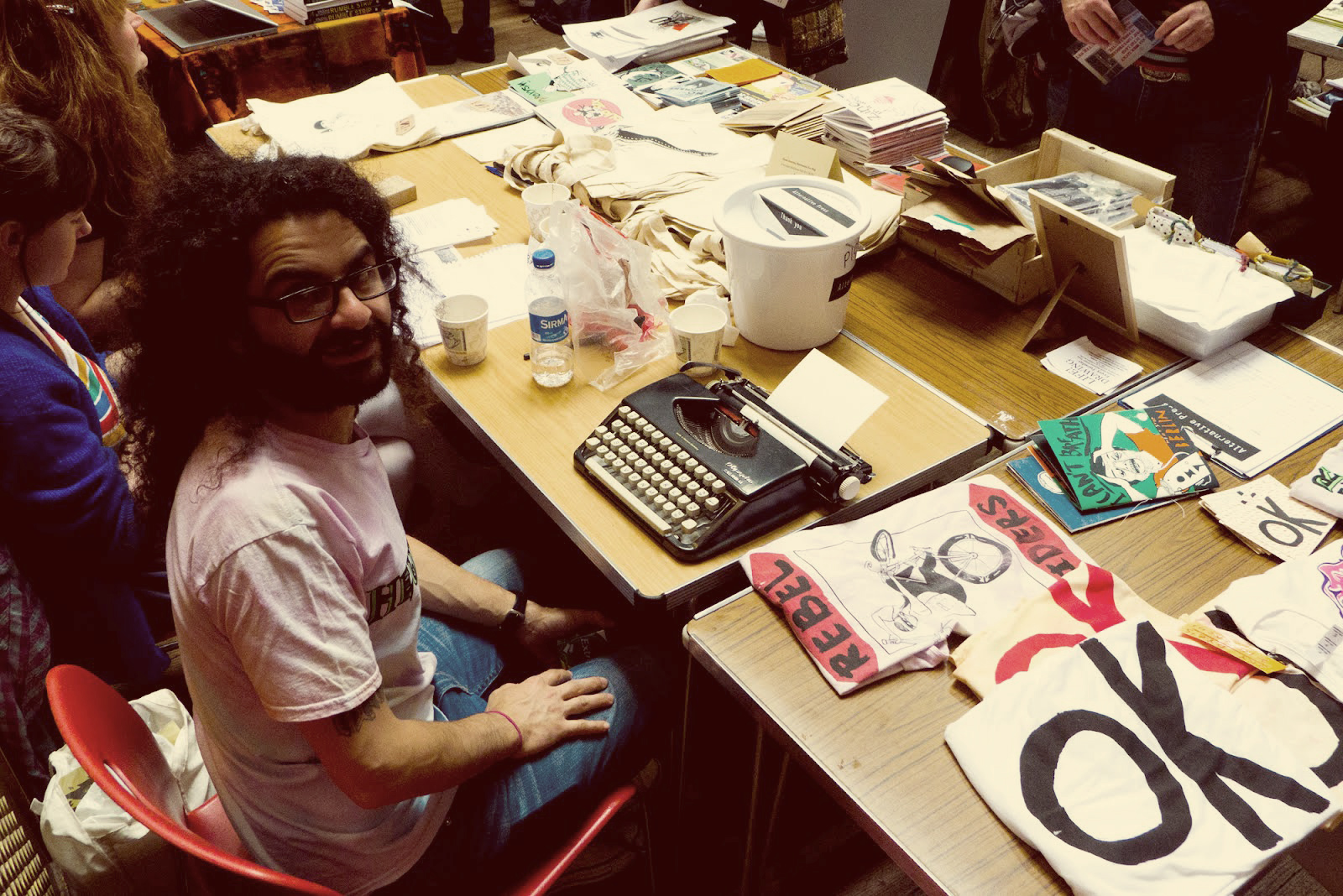
This Saturday, The Camden School of Enlightenment is coming to the International Alternative Press Festival, at London's Conway Hall. The show's at 1:45 sharp and will include your dearly beloved editors, Jon and Kirsty, on the interface between poetry and computer games. It will also feature
Abi Palmer, with a new What's New, Pussycat? update on her favourite compulsive amazon.com cat calendar critic. Tony Hickson, former paparazzo, knife-thrower and star of Byker Grove, will offer true stories and lifestyle tips. I shall be talking about Sir Henry Newbolt: Victorian balladeer, naval weaponry designer and menage-a-trois-er.
The festival is on Saturday and Sunday 4th-5th August, and other spoken word events include
- live storysketching
- Listen Softly, an afternoon of storytelling with words and handmade fabrics, presented by Ceri May
- left-field poetry collective Vintage Poison, maybe in collaboration with Michael Horovitz
- Structo magazine's So Bad it's Good - Adventures in Terrible Writing
Wednesday, 1 August 2012
August Writing Challenge on YPN

Back in April, I wrote a series of 15 simple formal ideas (some original, some derivative) with example pieces for National Poetry Writing Month. This month, the Young Poets Network is going to be publishing one every two days as a prompt for young writers, with an accompanying mini-anthology contest.
Day 1, together with a fuller explanation, is up here.
Poetry International Web Profile

This month, I'm featured on Poetry International Web alongside two other poets - Shazea Quraishi from Pakistan (now living in London), and the UK's Helen Ivory.
Here is the feature profile, in which I am generously described thusly:
His accomplishments include not only the writing of formal, voraciously experimental, precociously accomplished poetry but (along with his partner, Kirsten Irving) a boundary-breaking small magazine and a standard-setting small press – and an array of websites built by him to support all this activity.
They've also put up three poems: The Procedure (from School of Forgery), Eisenstangen (a version of Rilke's Der Panther) and Meat.
A short piece on Rimbaud's unhealthy influence on me
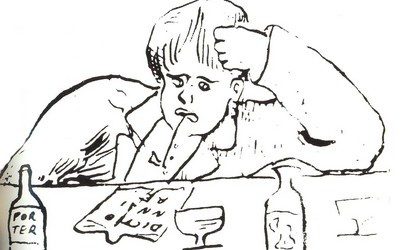
I was commissioned by new literary journal B O D Y to write a short article on a poem that has had a particular impact or influence on me/my writing. Here is the resulting article. I call Rimbaud a "sexy, amoral Tintin". With nits.
Thursday, 12 July 2012
Ethiopian Poetry Event!
This Sunday 15 July at 4pm, join us at the Ethiopian Community in Britain, 2A Lithos Road, London NW3 6EF for a celebration of Ethiopian poetry!

Hot on the heels of triumphant performances at Poetry Parnassus, a second chance to see the fantastic Lemn Sissay and Bewketu Seyum, as well as many other fantastic performers. Jon and me are joining in the fun too.
Hope to see you there!

Hot on the heels of triumphant performances at Poetry Parnassus, a second chance to see the fantastic Lemn Sissay and Bewketu Seyum, as well as many other fantastic performers. Jon and me are joining in the fun too.
Hope to see you there!

Back in early June, I launched School of Forgery alongside John Clegg's Antler, also out from Salt. Owing to an unfortunate concatenation of events, John arrived at the launch with very few copies of his book, and I gallantly deferred the chance to take home my own so that he might sell as many as possible on the night.
Earlier this week my own copy finally turned up, and while I'd say I'm probably too close to John now for a full review to be carried out with the requisite lack of bias, I did want to take a moment to say how much I like Antler and how, even against the backdrop of a steady flow of distinctive and excellent poetry volumes onto my exhausted bookshelves, it stands out as a genuinely characterful debut.
As the blurb hints at, Clegg mixes "genuine and imaginary anthropology", and the join between those aspects of his work that are essentially tall tales or fabulation and those that the results of diligent research is practically invisible. So too is the transition between tightly controlled traditional form and ranging free verse, the former being done so softly and unostentatiously. A quick march through some of the titles (Moss, Nightgrass, Wounded Musk Ox, Kayaks, Meteor, Dill, Mosquito) reads like a sort of ingredients list - words as ancient elements, boiled down tinctures, excavated knucklebones and panned nuggets, bottled and labelled for cautious use in the creation of spells and medicines. Plus there's the over-arching sensation of the poet's joyous obsessiveness, like a child collecting shells or insects, in everything he writes about.
So yeah, yeah, I recommend it.
.jpg)
I have a new poem, Terrifying Angels, in the latest issue of Poetry Review. Following the departure of Fiona Sampson, who helmed the magazine for a number of years, the magazine is entering a phase of having guest editors at least until some time in 2013. I have to say, it already feels much fresher for it. This issue, edited by the estimable George Szirtes (he and I have briefly been on bad terms in the past but I've always admired both his poetry and his dedication to the cause), is themed around branching out to include poetries not comfortably included within the 'mainstream' bracket, hence the subtitle: 'mapping the delta'. Szirtes' introduction reflects my own feelings about where how I'd like to see future dialogues progress:
"But I know where the less explored areas are. They are less explored maybe because they seem more difficult, more the possession of one particular tribe ... I admire much about these 'tribes' and wanted to invite writers to open them up through a sense of shareable enthusiasm, to tell us why they matter and to show us not so much the fascination of the difficult, but the fascination of poetry as a whole: the full delta."
As well as some very good articles by Emily Critchley, Daljit Nagra and Adam Piette, there's a rich crop of poetry presented, incorporating a wider-than-usual variety of styles. It's always great to see poets we've published in (and first discovered through) Fuselit hitting the big time, so I'm particularly pleased that poems by Christian Ward and Joe Dresner have been included.
With the next two issues being edited by Charles Boyle of CB Editions, and Bernadine Evaristo respectively, I'm feeling very optimistic about the future of Britain's flagship poetry journal.
Tuesday, 26 June 2012
Poetry Parnassus and raining poems!
Those of you in and around London shouldn't miss this week's MASSIVE festivities at Poetry Parnassus at the Southbank Centre.
Poets from nearly every Olympic country, huge names, workshops, debates, readings galore and a rain of thousands of bilingual poems are just some of the amazing events set up to celebrate a year of international coming together in London.
Already I've met poets from the Netherlands, Italy, Chile, Hong Kong, South Africa, you name it!
I'll be reading at Maintenant's celebration of the experimental and avant-garde, organised by the ever-energetic mass-interviewer S.J. Fowler, on Saturday at 7pm, which should be awesome.
There are events going on throughout the week until 1 July. Come on down and experience something new - it promises to be something very special indeed. There really will be something for everybody, and I know there are many readers I may never get the chance to see again.
Main site
Follow @wetblackbough and @Anna_Selby on Twitter, or search #poetryparnassus.
Poets from nearly every Olympic country, huge names, workshops, debates, readings galore and a rain of thousands of bilingual poems are just some of the amazing events set up to celebrate a year of international coming together in London.
Already I've met poets from the Netherlands, Italy, Chile, Hong Kong, South Africa, you name it!
I'll be reading at Maintenant's celebration of the experimental and avant-garde, organised by the ever-energetic mass-interviewer S.J. Fowler, on Saturday at 7pm, which should be awesome.
There are events going on throughout the week until 1 July. Come on down and experience something new - it promises to be something very special indeed. There really will be something for everybody, and I know there are many readers I may never get the chance to see again.
Main site
Follow @wetblackbough and @Anna_Selby on Twitter, or search #poetryparnassus.
Wednesday, 20 June 2012
Big news!
For those who don't yet know, last week Jon received an Eric Gregory award for his work on School of Forgery! He got to go to a lovely awards bash thrown by the Society of Authors and read the following night with the other winners, Joey Connolly, Holly Corfield Carr, Caleb Klaces, Rachael Nicholas and Phoebe Power.
In other news, this weekend, Sidekick Books have an hour's slot at Roddy Lumsden and Emily Hasler's New Poets Festival! It's being held, like everything in the world ever right now, in central London, so if you're about, please do come on down to discover a treasure trove of fresh writers.
Friday 22nd June - Join BroadCast at The Betsey Trotwood (map) for the launch of the festival, followed by part 4 of the 28 Project - Opposites Attract, which sees 14 pairs of poets reading new complementary poems based on opposing ideas.
With: Colette Sensier / Edward Mackay, Holly Hopkins / Sophia Blackwell, Hannah Lowe / Wayne Holloway-Smith, James Goodman / Nick Makoha, Mark Burnhope / Andrew McMillan, Martha Sprackland / Eloise Stonborough, Aime Williams / John Canfield, Nia Davies / Charlotte Geater, Vidyan Ravinthiran / Ben Rogers, Sophie Collins / Dai George, Dan Barrow / Tom Gilliver, Kayo Chingonyi / Amy Evans, Penny Boxall / Alice Lees and hosts Roddy Lumsden / Emily Hasler.
Launch drinks from 6.30. Readings from 7.45.
Saturday 23rd June - Today's events are at The Blue Lion pub (map) and feature largely poets from outside of London. Plenty of breaks between sections.
Times as follows (all approximate):
3.15-4 Showcase from Cake Magazine with Andrew McMillan, Martha Sprackland and others
4.15 Vidyan Ravinthiran / Mark Burnhope
5.00 – Kim Moore / Caleb Klaces
6 - 6.30 - TBC
6.45 – 7.45 Showcase from Stop Sharpening Your Knives poets with Emily Berry, Sam Riviere, Jack Underwood and others.
8.00 Kiki Petrosino / Andrew Jamison
9 Liz Berry / Kate Kilalea
Sunday 24th June - Back at The Betsey Trotwood. Plenty of breaks between sections. Times as follows (all approximate):
3.15 Showcase from Sidekick Books with Kirsten Irving, Jon Stone, Samuel Prince, Ian McLachlan and Abigail Parry
4.20 Chrissy Williams presents Poets of the Unexpected, with Holly Pester, Lorraine Mariner and Tom Chivers
5.20 Niall Campbell / Colette Sensier
6.10 Showcase from Penned in the Margins featuring James Wilkes, Sarah Hesketh and Michael Egan
7.15 Free for all – various readers present their favourite poems by new UK poets.
8.15 Kayo Chingonyi / Dai George
9 Helen Mort / Sarah Howe
Prices: Friday: £5; Sat / Sun: each £8 (£18 for three day ticket, £14 for Sat & Sun ticket). Bargain!
In other news, this weekend, Sidekick Books have an hour's slot at Roddy Lumsden and Emily Hasler's New Poets Festival! It's being held, like everything in the world ever right now, in central London, so if you're about, please do come on down to discover a treasure trove of fresh writers.
Friday 22nd June - Join BroadCast at The Betsey Trotwood (map) for the launch of the festival, followed by part 4 of the 28 Project - Opposites Attract, which sees 14 pairs of poets reading new complementary poems based on opposing ideas.
With: Colette Sensier / Edward Mackay, Holly Hopkins / Sophia Blackwell, Hannah Lowe / Wayne Holloway-Smith, James Goodman / Nick Makoha, Mark Burnhope / Andrew McMillan, Martha Sprackland / Eloise Stonborough, Aime Williams / John Canfield, Nia Davies / Charlotte Geater, Vidyan Ravinthiran / Ben Rogers, Sophie Collins / Dai George, Dan Barrow / Tom Gilliver, Kayo Chingonyi / Amy Evans, Penny Boxall / Alice Lees and hosts Roddy Lumsden / Emily Hasler.
Launch drinks from 6.30. Readings from 7.45.
Saturday 23rd June - Today's events are at The Blue Lion pub (map) and feature largely poets from outside of London. Plenty of breaks between sections.
Times as follows (all approximate):
3.15-4 Showcase from Cake Magazine with Andrew McMillan, Martha Sprackland and others
4.15 Vidyan Ravinthiran / Mark Burnhope
5.00 – Kim Moore / Caleb Klaces
6 - 6.30 - TBC
6.45 – 7.45 Showcase from Stop Sharpening Your Knives poets with Emily Berry, Sam Riviere, Jack Underwood and others.
8.00 Kiki Petrosino / Andrew Jamison
9 Liz Berry / Kate Kilalea
Sunday 24th June - Back at The Betsey Trotwood. Plenty of breaks between sections. Times as follows (all approximate):
3.15 Showcase from Sidekick Books with Kirsten Irving, Jon Stone, Samuel Prince, Ian McLachlan and Abigail Parry
4.20 Chrissy Williams presents Poets of the Unexpected, with Holly Pester, Lorraine Mariner and Tom Chivers
5.20 Niall Campbell / Colette Sensier
6.10 Showcase from Penned in the Margins featuring James Wilkes, Sarah Hesketh and Michael Egan
7.15 Free for all – various readers present their favourite poems by new UK poets.
8.15 Kayo Chingonyi / Dai George
9 Helen Mort / Sarah Howe
Prices: Friday: £5; Sat / Sun: each £8 (£18 for three day ticket, £14 for Sat & Sun ticket). Bargain!
Subscribe to:
Posts (Atom)


