Showing posts with label features. Show all posts

Sunday, 26 February 2012

Submission Accomplished!


Check out Submission Accomplished, an article K's written for the fantastic Young Poets Network on submitting to magazines. Comments appreciated!

Wednesday, 9 February 2011

Sidekick Books Artist Profile: Lois Cordelia


Continuing our artist profile series, today I'm talking to the fantastic Lois Cordelia, whose magical scalpel-cut silhouettes dance across the cover, and between the pages, of the forthcoming Birdbook I.

Born 1982 in Ipswich, Lois is a self-taught artist. Since graduating from Edinburgh University in 2006 with an honours degree in Arabic, she has renewed her focus on the visual arts through exhibiting in a series of solo and joint shows in the UK and Germany. Her work spans a diverse range of media and styles: silhouette paper-cuts, portraits in acrylics and pastels, wildlife art, still-lifes, Arabic calligraphic compositions, and sculpture. Her latest exhibition, Black Gold, has been extended till 10 March 2011 at the Open The Gate Cafe, Dalston.

Sidekick Books: Who or what would you say influences your work?

Lois Cordelia:
Ideally, artwork is an endlessly dynamic process of flow, in which everything influences and is influenced by everything else. I welcome positive influences from every source, whether visual, musical, poetical or mystical. Beauty inspires and speaks to me wherever I find it.

The creative process is a birthing process: a process of conception, gestation and bringing to birth. I am influenced and inspired by things I see or hear around me. These are the seeds that are sown in my imagination. The embryo grows, develops and evolves organically and takes on a life of its own, nourished by daily experience of sights, sounds and ideas. Only at the final stage (the 'birth') does the artwork manifest in physical form, though even during birth it continues to evolve.

As the poet Kahlil Gibran wrote: “Work is love made visible.” I avoid creating anything at all if I am not in a loving, positive, open frame of mind, because the resulting artwork will inevitably be affected by my emotional state. The flow of creativity often gives me a feeling of a natural 'high', and so my emotional response gathers its own momentum towards something approaching ecstasy that carries me through the tremendous struggle of 'birth'.

A couple of quotations by other artists that I particularly relate to are the following:

“I find in all the artists that I admire most a disturbing element, a distortion, giving evidence of a struggle. ... In great art, this conflict is hidden, it is unresolved. All that is bursting with energy is disturbing – not perfect.”

(Henry Moore)

“My goal in life is to give to the world what I was lucky to receive: the ecstasy of divine union through my music and my dance.”
(Michael Jackson)

SKB: Does the subject matter you use vary wildly, or do you find yourself returning to certain motifs and ideas?

LC: I strive constantly to reach beyond the mundane surface of things. Seeing a person, an animal, or a tree, for example, I try to capture something of the soul or consciousness that animates it. My inspiration comes from anything that evokes dance, movement and metamorphosis: nature, human figures, animals, trees, running water, the seasons, dance, music, rhythm, poetry, light and dark, and so my subject matter varies widely.

From intricate paper silhouettes, painstakingly cut by hand using a surgical scalpel, to fast and furiously painted portraits and landscapes in brilliant, dramatic colours, my artwork also spans a vast spectrum between precision and free-flowing energy, which has often caused visitors to my exhibitions to remark that the works they see could have been created by several different artists.

I tend always towards fluidity, allowing forms to evolve and metamorphose, one into another. Spirit is eternally changing and shape-shifting, and requires form to be flexible; if form is too rigid, it fossilizes and breaks. I particularly like to explore the expressive potential of Arabic and other cursive scripts to evoke this same principle, allowing the words to evoke further layers of poetic symbolism.

SKB:
What convinced you to take part in the Sidekick Books projects?

LC:
I've worked at intervals over the last decade with the Polish artist and illustrator of children's books Jan Pienkowski (co-author of the 'Meg and Mog' series, pioneer of the pop-up book genre, via Haunted House and other titles, and creator of many beautiful volumes of silhouette illustrations). Beyond this natural affinity and link with book illustration, I freely confess that I was persuaded to take part in the Sidekick Books project by the personal charisma and charm of our good friend the eminent alchemist Dr Fulminare...

SKB:
Do you prefer to work alone or collaborate, and why? If the latter, what would your dream collaboration involve?

LC:
The artistic profession can be an intensely lonely one. Being fiercely independent by nature, I generally prefer to work alone in the privacy of my room, immersing myself in my favourite music or poetry recordings, chosen to fit with whatever theme I am currently exploring.

Conversely, I would be the first to acknowledge my eternal debt to Jan Pienkowski (as mentioned above), from whom I have learned most about the organic process and philosophy of creativity and whom I will always consider my 'guru'. Whenever possible, I also love to perform live art demonstrations, painting portraits and landscapes or creating paper-cut works in public, as the dynamics of a live audience add an invaluable layer of zest and spontaneity.

SKB:
What would you say is the most common misconception about art that you've encountered?

LC:
The most clichéd misconception I've encountered is that professional artists (whether painters, poets or musicians) are naive and blissful "thinkers of beautiful thoughts", untroubled by reality. Frequently I am asked by people: So when are you going to get a real job? It is not a path for the faint-hearted. Yet it is consoling and humbling to find oneself in the company of some of the greatest artists in history, who have all too often worked themselves to pieces and burned themselves out at a relatively young age, in passionate pursuit of their vision, only to be “discovered”, recognised and appreciated a century after they died!

***

See more of Lois and her splendid scalpel at www.LoisCordelia.com.

Tuesday, 1 June 2010

Birdsong Zine


If you like gorgeous handmade magazines, you would do well to investigate Birdsong Zine. I was very kindly sent a copy of this lovingly produced journal to have a sneak peek at. At a tiny $6 plus postage, it's absolutely worth a flutter. Bagfuls of beautiful art in many forms, bushels of energy for promoting creative adventures and an obvious love of what they do. These guys make a fine tome.

Find out more at birdsongmag.com/
and on Facebook.

Thursday, 22 April 2010

When The Hate-Mongering Tart Met Fuselit


One of our favourite poets, E. Kristin Anderson, through her Hate-Mongering Tart blog, is currently putting together an almighty series of features to coincide with National Poetry Month. She dragged me and Jon out of the burning house of NaPoWriMo just long enough to ask us a few questions, and the (frankly gorgeously laid out) results can be viewed here!

Choice extracts include:

"I thought it’d be simple!"

"Extra emphasis on the ludicrous."

"I wish I’d been that good at that age."

"It involves having twelve different pseudonyms."

Friday, 5 March 2010

Global Poetry System


If you get the chance, check out the Poetry Library's Global Poetry System. An interactive tool that enables you to search and add poetry by geographical location. Suggest your favourites and track down new gems around the world!

gps.southbankcentre.co.uk

The Private Press: Lynchpins


The Private Press do the most fantastic anthologies of poetry, with a number based around the work of director David Lynch. If you're not acquainted with his work, it's bizarre, gothic, terrifying, surreal and grotesque, not to mention weirdly sexy.

Already out are the collections 'A Slice of Cherry Pie' (based on cult series Twin Peaks) and 'We Don't Stop Here' (based on Mulholland Drive), and this year should see the release of 'Deep River Apartments'. a collection based on the chilling and dyfunctional mystery Blue Velvet.

Currently the first two are sold out, but they promise more soon!


Make friends with the Private Press on Facebook.

Wednesday, 10 February 2010

Introducing Irregular Features!


The inestimable Dr Fulminare of (he of Sidekick Books fame/infamy) begs to alert all merchants, mountebanks, bards and footpads to his latest experiment, Irregular Features, a sporadically updated, peer-reviled journal of poetry goings-on, in which the following reactions and imbalances may or not occur:

  • Things to Make and Do - games and guides to coerce you into such unatural practices as generating 10,000,000,000 pantoums in but clicks, using fridge magnets to constuct your own poetry blurb, folding your own stanza-stimulating origami swift, crafting the images of famed poets from dots and much more.
  • Poetry Top Trumps - pit the varied talents of Ted Hughes, Frank O' Hara, Getrude Stein and Giorgos Seferis against each other in a duel to the (probably car-crash or oven-related) death, with further metersmiths to be added.
  • Woe's Woe - a directory of suffering, for when 'blue' won't cut it and 'out-of-sorts' is too infuriatingly non-specific to pinpoint exactly what kind of pain you are feeling. You will be introduced to such diagnoses as Faughstalkery, Lentopression and Repustress and before long, Dr F vouchsafes that you should be able to accurately diagnose misery at a good ten paces!
  • Plus Articles, Reviews and Interviews with poetry types, as the benevolent Doctor permits.
Dr Fulminare requests contact with any sharp-witted types who, upon spying this literary litany, feel they too may wish to contribute ingredients, or, tangentially, anyone with staunch amounts of scentless sulphur for sale at a reasonable rate. Contact him through the Devil's Wiretangle at drfulminare@googlemail.com

Saturday, 23 January 2010

Tall-lighthouse


Tall-lighthouse, the popular London-based poetry publisher, began its Pilot scheme in April 2007 with the aim of publishing pamphlets by a number of promising poets under the age of 30. This enables young writers to hone and show off their material, for the most part prior to releasing full collections, giving readers a taster of their style and what's potentially still to come.

Roddy Lumsden, editor of the series, takes a very hands-on approach to the poetry, which makes all the difference. But then Roddy has always taken an interest in promoting new writing and helping young poets to get the best from their work, be it through critique, his regular Broadcast events or the workshops he organises through the Poetry School. The end result for the Pilot pamphlets consists of tight, quick-witted snapshots that give an excellent cross-section of emerging poetic talent.

Let's have a peep at the pamphlets themselves. Striking and more than a little corporal in red, white and black, they're quite minimalist too. The format is the same for each - a clean snowy background, a splash of red and a small b/w image on red that is unique to that pamphlet. Abi Curtis's 'humbug' sports a patterned snail's shell, while Ben Wilkinson's 'the sparks' features lightning striking the ground beside a ragged tree. It's definitely an interesting approach to maintaining a coherent and recognisable look to the series without sacrificing the individuality of the content in each case. I do, however, wish that you could see the full cover of each on the t-l site, instead of just the unique image for that collection - it's a good look for the site, but you lose that exciting something about buying a book when you can imagine how it looks as a whole and practically feel it in your hand.

The Pilot pamphlets have come in for high praise: Jay Bernard and Kate Potts have been awarded Poetry Book Society Recommendations for 'your sign is cuckoo, girl' and 'whichever music', respectively, and Potts was also shortlisted for the inaugral Michael Marks Award. Sadly, thsi excellent scheme can't survive on praise alone, even with some support from the Arts Council, so do investigate the site and stop by the shop. At £4 a pop, getting into the Pilot pamphlets is a pretty pocket-friendly venture.

The full chronological list of the Pilot pamphlets is as follows:

Abi Curtis - humbug
Adam O'Riordan - queen of the cotton cities
Camellia Stafford - another pretty colour, another break for air
Gareth Jones - weekend millionnaires
Jay Bernard - your sign is cuckoo, girl
Miriam Gamble - this man's town
John McCullough - the lives of ghosts
Retta Bowen - the ornamental world
Kate Potts - whichever music
Vidyan Ravinthiran - at home or nowhere
Ben Wilkinson - the sparks
Emily Berry - stingray fevers
Amy Key - instead of stars
Sarah Howe - a certain chinese encyclopedia
Charlotte Runcie - seventeen horse skeletons
Richard O'Brien - your own devices
NEW Ailbhe Darcy - a fictional dress
NEW Simon Pomery - the stream

Treat yourself!

************************************************************************

Tall-lighthouse calls www.tall-lighthouse.co.uk home.
Our review of Charlotte Runcie's 'Seventeen Horse Skeletons' can be found here.

Thursday, 21 January 2010

Photo Shoot with Liam Davenport


Liam Davenport contacted Jon a few months back. He was creating a set of images of London poets, and had recently shot tall-lighthouse poet Amy Key (in the *click*, rather than the *pow* sense). Amy had subsequently suggested to Liam that Jon model at some point, and maybe me too. We were definitely up for it. Find me a poet that wouldn't want their photo taken by a proper photographer - flattering and quite exciting.

A writer himself, Davenport works entirely in film and uses his fiction skills to construct narratives through his visual work. He specialises in fashion, portraiture, bands and gigs, theatre, urban scenes, and landscapes.

The idea for this project was that each poet should choose their favourite spot in London as their setting. Some people went for their own homes, or pubs. Jon snagged the prime photographic real estate of Regent's Park, a place we visited often during the year we lived in Maida Vale, and the most beautiful park I've seen in London. He really enjoyed his shoot, reporting back that he lost track of time because he found himself just chatting as Liam took the photos.

Today I went for my session. It was tough to choose a place. I don't actually love that many places in London besides my own bed. All the beautiful spots are overrun or expensive and I didn't want to copy Jon and pick a park. I thought of ZSL London Zoo, but that would be tricky both in terms of cost and clearance. So Jon suggested Gray's Inn.

To the uninitiated, Gray's Inn is one of the four inns of court. Basically, you have to belong to one to qualify as a barrister in England and Wales. I worked full-time at the Inn library for a year and can remember showing up for the interview and being really impressed by the architecture. Here's the library (that's Francis Bacon in the middle there):

Unfortunately, the Walks were locked. That's the beautiful gardens area where lawyers lie on the grass in summer and forget all their arbitrations. Well here, here's a picture:


Nevertheless, we found plenty of spots around the Inn that would work for this purpose, with a lot of reliance on Liam's photographic eye (in the future I will actually invent a photographic eye Copyright Kirsten Irving 2010 patent pending 4eva). Nooks of the buildings, in front of the accursed locked gates to the Walks, in the squares. There were a lot of options.

Overall, I really enjoyed meeting Liam and the whole surreal experience of modelling. I wish I'd been a bit more relaxed, is all. The general look he was after was relaxed and natural, after all - you just suddenly freeze up when the lens points at you. Unless you're Tyra Banks, in which case when the camera's on you, you morph into a drunk, apoplectic French drag queen. Still, hopefully there's some pictures in there where I'm not gurning too much.

Following his final two shoots, Liam is planning to host an exhibition of the photos; other subjects include Heather Phillipson and Chris McCabe. It's going to be fantastic and really interesting to see how familiar people and strangers alike translate onto film. Will keep you posted!

************************************************************************

To sample Liam's photographic and literary work, have a peek at www.liamdavenport.co.uk.

Saturday, 19 December 2009

Showing your workings


I've just been to see The Paper Cinema's The Night Flyer at the Battersea Arts Centre tonight, a story of a young man's heroic endeavour to save his beloved from fiendish top-hatted rail travel enthusiasts.

The set up was as follows: a video camera is set up in the centre of the room, which is linked up to a projector. The animation is then created in real time, using a series of beautiful paper cut outs which are moved in front of the camera by the two animators/puppeteers.

It struck me that there was an enjoyable tension created by having the mechanisms of the animation laid bare in this way - you could see a pictorial cut out being readied, wonder how it was going to be used and then see it realised on the screen. It didn't distance you from what was taking place within the story, but the two inalienably connected spectacles of creating and creation resonated with one another strangely. You could never actually see the act of creating an effect or movement and the effect or movement itself, but you could infer perfectly between the two (a kind of aesthetic 'knowingness' perhaps?) Against this was a semi-improvised musical accompaniment which in part acted as a glue for the visual experience, allowing you to become immersed in its tensions - or despite them, if you should so choose. But the music must have been more than this, because what was happening visually was of course a parallel of the music, but made clear in a way that we wouldn't normally hear or see in music. Or perhaps it was there all the time, and I'm just not sensitive enough to it.

Phew. I hope that made some kind of sense - I may have been reading too much aesthetics. After the performance, we were showed sketches and talked through what The Paper Cinema presently had in the works - a retelling of the Odyssey. Interspersed with this was further music - some of it the planned score for the new work. It was a pleasure to see a project in its early stages, and it was good to be given an opportunity to input into it - though I question the use of standard BAC forms as a means of accomplishing this. It seemed slightly undiscursive, and the questions didn't quite fit with what we'd seen and been shown. In fairness though, we were all perfectly free to ask questions, and food was offered in an attempt to create a more congenial atmosphere. As with so much, it was what you made of it. For my part, it has got me to consider carefully how you can expose artistic processes to generate more than just critical distance, and what kind of strategies you can employ to encourage people to engage in what you're doing.

Tuesday, 15 December 2009

Need an Emergency Christmas Present?


Pentone mugs. I've been meaning to mention these for a while now. Nick and Sue Asbury, a writer/designer team, have come up with Pentone (geddit?), a system for organising voice into different tones.

The Pentone website has tones ranging from 'Hallmark' to 'Palin', 'Boring' to 'Daily Mail'. The mugs, which can be ordered individually or in a set, are 'Yorkshire', 'Sympathetic', 'Stirring' and 'Mug'. You get a swatch sheet featuring the full range with every order though.

Asbury & Asbury are also responsible for the book Corpoetics, which myself and others reviewed for Happenstance here. It's a rather clever little book made up entirely of poems collaged from corporate mission statements.

Back to Pentone, and my current favourite is probably 'Dithering':


Sunday, 29 November 2009

Scuba Dogs!


This weekend me and Jon went to Donna Nook near my parent's place in Lincolnshire. The beach there is host to a huge colony of grey seals who return to have their pups around this time every year. I've been back the last three years, as it's such a unique opportunity to see wildlife up close in its natural habitat. That and the pups are very, very cute.

The first thing that strikes you as you walk towards the beach is the sound. It's not hard to understand how so many myths have sprung up around seals - it's truly haunting to hear this howling echoing across the sand.

As soon as you get near the colony, it's a pretty impressive sight. Hundreds of seals lying across the sand (1,200-odd babies born this year!). Jon described it as looking like a cross between the Normandy landings and the aftermath of an insanely over-indulgent dinner party.


The Lincolnshire Wildlife Trust provide a voluntary protection and information service, and a small wooden fence has been erected, which you can stand behind, so as not to interfere with the seals and their pups, and to stop the children biting the animals. This little guy wanted to explore the strange bipeds behind the fence for himself!


It's usually fiercely windy and/or drizzly at Donna Nook, owing to the season and the coastal exposure, which is good for two reasons: firstly, it stops me staying there all day gawking at tubby pups waving their flippers and secondly, it puts a slight cap on the rapidly increasing numbers of visitors. Don't get me wrong, lots of people coming, enjoying seeing the seals and donating to the Trust is a great thing, but if it gets too crowded, it's harder for anyone to enjoy themselves, not to mentions the stacks of burger vans that'll move in (without, I suspect, paying a penny to the Trust for their increased custom), and eventually you can't help worrying that the Trust will get overstretched and the animals disturbed. So I welcome foul weather - it's a natural moderator.

You get a full cross-section of the harsh realities of life in wild even in just a short period of time on that beach. Dead pups who had failed to gain enough weight, fights between huge bulls, rapes, the struggle by new mothers to defend their pups, not just from us, but from aggressive suitors wanting the offspring out of the way to get to the females. According to Trust information, the mortality rate for pups is 10% at Donna Nook, way lower than the average, though it rises to approximately 40% once the pups are out on their own in the sea. It's not an easy existence. You do, however, alongside the more grim aspects, get to see moments like this mother suckling her pup:


So that was our trip to see the seals, or scuba dogs, as a geordie colleague calls them. Oh, and I had to include this guy. He's got a good attitude.


More seal photos can be seen here if you fancy a further (albeit badly shot) peek at colony life.

Friday, 27 November 2009

Wii Sports Resort: Table Tennis


Part 3 of my extended, rambling Wii Sports Resort Review that has absolutely nothing to do with poetry except that it helps to compose the mind during creative droughts - apart from, of course, when I'm shouting blue murder at it and convincing my housemates I'm somewhere between psychotic and five years old.
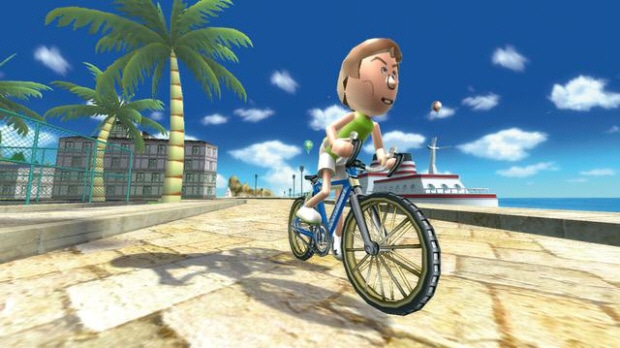
This has started happening a lot with the Table Tennis. It's OK until I start caring about winning, and then I get gradually more and more irritated with it. More on that in a moment.

Wii Sports Resort Table Tennis is possibly the best demonstration of the Wii controller (with Motion Sensor Plus accessory!) yet. You wield it exactly like a real table tennis bat, even down to your backhands and topspin. There are two major respects in which you don't have the sort of control you might like: 1) the way your Mii moves round the table is completely down to the AI, and 2) the actual left-right direction of your shots, as in Wii Sports Tennis, is decided by how quickly you hit the ball after the bounce. Hit it quickly, and you strike across your body. Wait a moment and you'll hit it in more of a straight line.

Apart from that, it's more or less like playing real table tennis, except without (a) those annoying moments when your hand-eye coordination completely fails you, and (b) having to go get the ball from a gutter, or a roof cavity, or a fast-flowing river, or from underneath another table in the middle of someone else's game.

Playing against another human, as far as I've had the opportunity to do that, is hunky dory. I suppose that's the whole point of it, which might explain why the single player experience is such a drag. It follows the general Wii Sports Resort rule: the more you win, the more your experience goes up, the harder your opponent. Lose, and your points go down, and you'll face someone more within your ability range. The result is that I casually thrashed everyone silly for my first umpteen games, and now I find myself ping-ponging (ha!) between opponents I can beat blindfolded and others that seem to have some kind of telekinetic control of both the ball and my Mii's body. I might have them stuck on the far side of the court, then smash it with ample topspin onto the extreme other side - it don't matter. They'll not only get a bat to it, but remove all my spin and replace it with some sort of foul incantation that makes the ball bend into a near-orbit. With the limited depth perception the television screen offers, I frequently run foul of returning the ball before it's bounced on my side, losing me another point.

There's one particular character who keeps coming up. His name's Akira, and I'm sure he's some kind of programmer surrogate. If I have the audacity to get a 2-0 lead at the start of the game, Akira uses his mind-powers to force my Mii to stick to one side of the court while he bats to the other, or replaces my ability to smash with a sort of 'keepy-uppy' movement. I can almost tell that behind his stoic 'concentration' expression, he's laughing at me. That's not relaxing! That's not what I go to a sports resort for! I want opponents who are tricksy, sure to get a point if I let my guard up, but will ultimately fall if I put in a killer performance. Instead, Akira stares at me with his Dragonball Z eyes and says, "You just don't get it, do you? Your table tennis chi is so pathetically weak that I have to hold back 90% of my power just to keep from crushing you like a bug." He's worse than the Champion, who at least has a weakness you can exploit.

The only other way you can play table-tennis is in a sort of rallying game, where you simply have to bat back as many balls as possible without messing up. Occasionally, a tin can is put on the table and you have to hit that for extra points. After returning 100+ balls though, I tend to get sloppy out of boredom.

Wednesday, 25 November 2009

Wii Sports Resort: Cycling


Part 2 of my rambling review of Wii Sports Resort.

Cycling
has been unfairly maligned in every other review I've encountered. Why others prefer the likes of Wakeboarding and Basketball is beyond me. Maybe it's something to do with what you look like when you're playing it, since cycling has you pumping your arms up and down frantically to move the pedals while tilting left and right to steer. It's certainly not the most elegant of control systems, but all that movement does help you feel like you're actually competing in something, as opposed to simply waving a magic wand around to make figures on the screen perform all your feats for you. There are moments when I've crossed the finish line unconsciously leaning forward like a sprinter going all out for the last few feet, then realised, as the results come in, that I'm actually pretty breathless.

Unfortunately, a system of 'energy' hearts makes it more complicated than it needs to be. Rather than simply being able to armpump all the way to the end of a race, you have to watch out for how the wind, gradient and surface is taking its toll on your Mii's energy. Push him too hard and he goes blue (presumably from lack of oxygen in his blood) then has to stop to chug a Lucozade. For a while, I found this infuriating, as he seemed to spend half the race on his last legs, puddling the track with massive sweat drops while other cyclists sailed past him on basket bikes. After some time, I worked out that moving your arms at a leisurely pace is pointless - instead, you have to alternate frantic pedalling with complete rest. That way, he lasts a lot longer. I wonder if it has something to do with the limits of the motion sensor technology, since the movement of your Mii's feet on the pedals seems to be only tangentially related to where you're holding your arms and he rarely matches pace with you.

The best thing about cycling is the feel of breezing around the expanse of the island to some jolly, continental-style music. Nearly every other sport takes place in a small arena, but cycling takes you in and out of the volcano's core, all the way around the beach, through the town centre, over various types of bridge and even off the edge of a cliff with the wind behind you. One course even goes full circle round the island. The only thing missing - and this is the case even more than in the swordplay - is the ability to roam entirely free. I was hoping that this would be the last option to unlock on the menu screen and instead all I got was a six-course race. Ugh.

Which brings me to the other major defect. Every race starts you off in last place out of 30, 50 or 100 bikers. That's a bizarre way to run a competition. You have to spend the whole time trying to overtake people, which sometimes isn't much fun, as the other cyclists tend to have the compulsion to try to barge you off course, particularly if 'off course' means into the water or off the edge of a mountain track. Which in turn brings me back to the first problem - I can't help imagining how much fun it would have been if, having taken the plunge down the sheer rock slope, I could half-cycle, half-pinball my way to the bottom instead of disappearing into thin air and being put back on the course.

Why did Nintendo go to all the trouble of making this gorgeous fantasy island, only to restrict you to an aerial view? Touring it by bike (while possibly still in your swordplay gear) would have been, I think, a legendary moment in gaming history. It would be like the Grand Theft Auto
games, except without the dull gangsta characters and the downpour of inane policemen waiting to gun you down the moment you do anything fun. Imagine: you're on your bike with your plastic fencing sword, coasting through a sunny town, knocking down Hitler and other look-a-like Miis like a computer-age Don Quixote tilting at windmills. Then you ride straight into the table tennis table and fly into the swimming pool.

Two player cycling is good fun though, especially as you have the option to either race against each other (and five other randoms) or take on the pack with a tandem.

Monday, 23 November 2009

Wii Sports Resort: Swordplay.


Kirsty made the mistake of buying a second-hand Wii from someone at work two weeks ago. Since then I've been spending every break in my busy work schedule (and some of the time I should be working) playing Wii Sports Resort. It's 12 games in one, all requiring you to use the Wii's motion sensor remote in ways vaguely approximating the wielding of certain sports utensils, such as oars, bats and kendo sticks. The clever conceit is that all these activites are available at a resort called Wuhu Island - which would be so much ho-hum if the game developers hadn't designed the whole island in detail and given you the option of exploring it with a seaplane. So it's sort of like going on a brief holiday to a place too fantastic to really exist, and I like that in a computer game, particularly if it's raining outside.

Anyway, I'll do a quick run through the activities and say what I think of them. In one player, the general mechanic in each sport is that the more you play it, the more experience you get, the tougher your opponents become. If you start losing, you drop points and your opponents get weaker. This works well up to a point, forcing you to discover new techniques that will give you the edge without ever overwhelming you too badly. However, not having any control over the level of difficulty means that every game requires concentration, somewhat depriving you of the option to just relax and go on autopilot. It also robs you of any sense of 'beating the game', since the contests are never-ending.

Case in point - Swordplay. This is my favourite of the games on offer, since it reminds me of playfighting as a youngster. You swing, thrust, parry, knock opponents into the water or off the hillside and generally make-believe you're a samurai/fencing genius. It's loads of fun in two-player, where you can taunt each other as well as inflicting humiliating blows. In one player, I've played it to death, beaten the 'champion' and collected many of the 'stamps' that supposedly signal the depth of your achievement. All this means is that I have to spend every battle now constantly blocking while I wait for the tiny opening in my opponent's defence. If I'm lucky, I might get three or four good bitchslaps in per match, but most of the time, it ends in a stalemate.

The Showdown mode, where you face off against waves of weaker opponents while making your way across the island towards the ancient ruins and the volcano, also suffers. At first I was slicing through opponents left, right and centre, bowling them into each other, taking their feet out from under them, generally being the ruthless, invulnerable ronin I always knew I was on the inside. However, as the stages become tougher, it soon becomes apparent that no matter how many enemies gather around you, only one of them will face off with you at a time. Continuing to treat them like a hoarde of attackers just means you get your arse kicked for being too hasty - you have to concentrate on one at a time, patiently watching for the best time to strike while the others dither, awaiting their turn.

The Speed Slice mode is fun for a while - a referee throws various objects towards you, from clock radios to watermelons to bamboo poles, and you have to cut them in the direction instructed faster than your opponent. The best thing about it is that you get a few moments before the next round, during which, if you're frenzied enough, you can actually slice the object in question to ribbons.

What's missing from Swordplay - and this is a theme throughout Wii Sports - are two things: firstly, a more free-roaming mode which lets you explore the island in your samurai gear, challenging strangers to fights. It would be particularly satisfying if you could march right up to the table tennis court and take revenge on whoever beat you in the last match.

Secondly, and more importantly, the level of violence is too low. I know this is meant to be a family game, and so we can't really kill people. Fair enough. But the worst you can ever do to an opponent, it seems, is disappoint them. When they roll off a cliff, they're immediately saved by a balloon. When you knock them to the floor, they sit around wriggling their legs for a bit as if mildly inconvenienced. Even after plunging into the sea from an elevated platform, they turn up moments later, dripping and looking just ever so slightly downcast. Not to mention you're fighting with coloured sticks instead of swords.

I dunno - maybe I'm perverse. The only enjoyment I ever got out of The Sims was sealing two people in a room adjoining their house, with a window so that they could watch their girlfriends carry on their lives untroubled while they slowly went insane and starved to death. I never got far on Rollercoaster Tycoon because I couldn't resist building a ride that ended half way through, in mid-air, calling it 'Certain Death', and then watching as hundreds of tiny sprite-based punters queued up, screamed with delight and then with terror, as they expired in a corkscrew of flame. Part of what I like about games is doing things that you can't do in real life because you're considerate of other people's rights and feelings. Games characters don't have rights or feelings - they just exist as part of an extended formulae for getting the player's brain to release endorphins. So I would have really appreciated being given the option to march into the town square in my swordplay gear and start knocking holiday-makers down like skittles. And I'd have appreciated seeing opponents you have bested clutching their knees or chest in discomfort, losing their grip on their swords, crawling feebly away or flat out not moving, so as to imply they've actually had enough, rather than simply being 'tagged out'.

I said I'll do a 'quick run through' - actually, I'm doing my usual thing of going into far too much detail. So I'll save the other sports for another day!

Thursday, 19 November 2009

Topolski Century and Bard Games sneak peek


On Thursday 5 November, Fuselit scuttled to the new open mic night hosted by Abi Palmer at the freshly reopened Topolski Century gallery. It's a great choice of venue, partly because the action takes place in a cosy nook with cushions as well as chairs (leaving less likelihood of disturbance by random amblers) and partly because it introduces Topolski virgins like Jon and me to the Polish artist's work.

With vintage cartoons playing across the wall and a mini-picnic of refreshments, an audience space that has room to expand, but which wouldn't feel too empty on a quieter night, and time in the interval to wander round and view the artwork on display, it's sure to become an open mic favourite.

Our set, a double-headed beast, featured a preview of Bard Games, the bonus booklet to be given away with Fuselit's next issue, Tilt. We've had a bash at writing poetry using tabletop, board and card games to create rules and forms, with varying levels of success. Favourites such as Jenga, Dominoes, Scrabble and Battleships have been mined and turned into verse, accompanied by instructions, in case you want to have a go yourself.

If you have interesting ideas for hybrid forms or weird and wonderful poetic structures, we'd like to hear from you. Comment here or email contact@fuselit.co.uk

Tilt will be out soon - keep 'em peeled.

Wednesday, 18 November 2009

Transformers #1


The first issue of IDW's Transformers comic series is released today. You might be forgiven for thinking that this is a swift cash-in on the staggering success of the two recent (utterly shit) movies. But you'd be wrong! Believe it or not, Transformers #1 (the '1st BLOCKBUSTER ISSUE') is just the latest issue in a continuity that has been running for over four years. Welcome to the wonderful world of comics. If you think that's bizarre, try following Peter David's X Factor. October: issue 50. November: no issue. December: issue 200!

In this case, the reason for the 'issue 1' label is partly because the story is now under he helm of a new writer/editor/artist team and partly because this is the first time IDW are officially publishing an ongoing monthly Transformers comic. Everything they've put out up until now was in the form of mini-series of four, five, six or twelve issues and individual one-shots. A major mistake that, I imagine, cost them a chunk of their readership, was never making it clear within the comics what order they should be read in. Characters from spotlight issues would turn up in the fifth issue of one of the mini-series, carrying with them plot threads you didn't know existed if you hadn't been buying everything under the TF banner. Just to make things even more confusing, they were simultaneously republishing the back-catalogues of Dreamwave and Marvel's stints on the property.

This comic, written by Mike Costa, is an attempt to continue where the previous series, All Hail Megatron, left off, at the same point as providing a fresh 'starting point' for new readers. In the latter respect, it works quite well. Everything you need to know is spun out rapidly over the first few pages. It's the near future, and two years ago, a race of warring robots, with the ability to disguise themselves as vehicles, turned up and trashed the planet. Now we (the human race) are hunting down the survivors of the battle, good and bad. The baddies (who lost the fight) are short on energy supplies and regularly captured. The goodies are better at hiding, but are ticked off at their leader, who insists on remaining on Earth in the misguided belief that those baddies that escaped the planet will come back and attack again.

And really, that's all you need to know. There's shades of District 9 in its depiction of how we react to unwelcome visitors from outer space and the issue sets up a bit of a leadership struggle within the ranks of the alien robots. There's killing, a rescue mission, and some crisp dialogue.

Unfortunately, the art is a mixed bag. Don Figueroa is a fan-favourite Transformers artist whose attention to detail is always impressive. He's trying out a new style here that leaves the robot's bodies looking generally over-fussy, while their faces throw up more District 9 comparisons. There are expressions of anger, despair and fear going on somewhere in the middle of these spiky, toothy, emaciated visages, but it's often hard to make them out, especially when the default setting is a sort of gurn. At the very least though, it's not as bad as the movie models and these Transformers are colour-coded so you can tell them apart.

As a follower of IDW's Transformers series over the past few years, the issue is a little more troublesome. Optimus Prime, the Autobot leader, has taken a nosedive from being a competent, spiritually vigorous military commander coordinating a galaxy-wide war effort to an indecisive wet lettuce, seemingly marooned on a single planet by his own choice. His lieutenant, Prowl, has gone from an edgy, frustrated and strictly by-the-book officer to, on this evidence, a generic hothead (a plotline about him manipulating another high-ranking character has been put on the backburner). The Decepticons, as I understood it, have been ravaging countless worlds, yet here the Autobots talk as if a single skirmish on Earth defeated them.

This is, however, a much better 'soft reboot' for the series than the last one, All Hail Megatron, a twelve issue series that either forgot, or rode roughshod over many previously established details and didn't even make much sense on its own logic. What hurt even more in that case was that the previous few story arcs had all been written by Simon Furman, a legend of Transformers fiction, and it was his convincing reimagining of the concept for the 21st century that got me reading these comics again. All Hail Megatron, for reasons not entirely clear, did nasty things to Furman's better established characters and returned the series to a cousin of the 80s cartoon, replete with giant Dolby cassette tapes and construction vehicles the size of buildings.

Any fan of Transformers knows that the comics are where the characters live, breathe and die (and die a lot) while the movies and cartoons generally muck about with product placement and kid-appeal characters. If the comics are going strong, the brand is going strong. On present evidence, this new direction could go either way. Even if it goes the wrong way, IDW have made a rare and significant discovery in the form of super-talented writer/artist Nick Roche, who begins a new mini-series, called Last Stand of the Wreckers, in January. There's no question in my mind that that, at least, will be worth picking up.

Tuesday, 17 November 2009

Aiko Harman


Fuselit first came across Aiko Harman's work when she appeared in our MARS issue. We were impressed by her clean, spare style and quirky approach and it was great to be able to feature her work. Thanks to my tomfoolery, she was wrongly credited in the bios section as male. She is in fact, very much female and a powerhouse of creative projects, as well as an enthusiastic promoter of the projects of others.

The first thing you discover online when you search Aiko's name is her blog. Eccentric, cute and beautifully laid out, with polaroid images, cartoons and lots of features on her own work and that of other people, it's inviting and energetic and does wonders to dispel preconceptions about poetry being stuffy.

Furthermore, how many writer's blogs do you know that have a store? OK, well maybe a few, in which you can find standard copies of pamphlets and books. How many writer's stores, then, feature handmade robot, seahorse and goldfish toys based on their poetry?


Poetrybot: Circuit breaks? Line breaks? You got it!

As Aiko herself puts it: "I kept going to poetry readings where all anyone ever had for sale were poetry pamphlets and chapbooks. Pamphlets are great and lovely and cheap and nice to collect but sometimes it's good to see some variety on the table."

The Poetry Pets (our favourite is the plush Scrabble tile) are part of Aiko's co-piloted project The Adventures of Lion and Sloth. Unsurprisingly, Fuselit fell head over heels for the idea. How cool is that? Lion and Sloth also does stationary and no doubt has other plans for poetry/craft crossover fun in the pipeline.

You can also read her poetry on the blog, where it quickly becomes apparent that Aiko is all about collaboration. From lyrics to spurwords to practical projects, her style lends itself readily to so many creative ideas and seems to represent the prompt, the process and the result in different scenarios. You spend a minute or two wishing there was more of this kind of enthusiasm for cross-pollination about. Then you buy a robot and grin all the way home.

Aiko Harman hails originally from Los Angeles, but is currently studying for an MSc in Creative Writing at Edinburgh University. She has also lived and taught in Japan. She is interested in representing her mixed Japanese-American heritage in her poetry, which has featured in Miyagi's International literary journal, The Drum, and in Edinburgh's Read This, and Tontine, among others. She was a 2008 recipient of the William Hunter Sharpe scholarship in creative writing.

See more of Aiko in the upcoming Sidekick Books anthology Obakarama, a collection of poetry inspired by Japanese folks monsters, in which she tackles the Kappa! More on this in good time.

(all images borrowed from www.lionandsloth.com and aikowrites.blogspot.com)
Oh, and you can follow Aiko on Twitter too, at www.twitter.com/aikowrites

Monday, 16 November 2009

Cereal:Geek


I mentioned Cereal: Geek yesterday and thought I should talk about it a little more. In a nutshell, it's a full-colour, advertisement-free, independently published British magazine about 80s animation. As with Fuselit, each issue is a labour of love, and so rather than appearingly monthly or bi-monthly or whatever, they're ready when they're ready. It's lavishly - lavishly - illustrated. What editor James Eatock has managed to do is harness the power of dozens of children of the eighties who have grown up to be aspiring illustrators and artists, and who, as a consequence of their TV upbringing, honed their skills devotedly sketching the very characters that Cereal: Geek celebrates. The range of styles is considerable, given the need to replicate the bright colours and charmingly impractical costumes of children's cartoons. Often, a character is interpreted with a slightly kinky or surreal bent (the cover to issue 1 was a bruised and battered She-Ra) that hints at the kind of things we weren't supposed to see or think about with regards to these fictions.

The features are very inventive too. They've happened upon the 'imaginary top trumps' idea, same as wot we've done, except theirs are rather more convincing, and run a regular section speculating on what the cartoon version of popular live action franchises would have looked like. So if you've ever wondered how an Indiana Jones: The Animated Series might have played, Cereal: Geek gives you a pretty convincing idea.

Is the subject frivolous? I don't think so. This is pop fiction an entire generation identifies with and the magazine examines it through multiple perspectives. In fact, each issue so far has dealt with a particular theme - from Violence through to Evolution. Episodes are rewatched and rated on how blatantly they advertise new products to the intended audience, whilst other articles imagine the extended existence of characters in the afterlife of the show they starred in and how they adapt to life without an arch-enemy.

And let's not forget that eighties animation doesn't just mean Transformers and other 'gimmick' products (not that I'm down on Transformers - more on that later); it also includes things like the wickedly inventive British claymation series The Trap Door, voiced by the late Willie Rushton, and Jean Chalopin's epic reimagining of the myth of Ulysses as a space opera. The first article I wrote for the magazine concerns The Mysterious Cities of Gold, which combines myth and science fiction with the 15th century oppression of the Aztecs, Incans and Mayans by the Spanish empire, replete with real historical villains.

Now, I'm not making a case for eighties animaton as high art but it is a treasure trove of strange and wonderful pop culture, and Cereal: Geek dives right in. Plus it's only £6 for 100 pages, printed on high quality paper, which is remarkably competitive when you look at the prices on the Sainsbury's magazine rack these days.

Thursday, 16 October 2008

FuseLit interviews Richard Tyrone Jones


He's known around town, from bordellos to theatres. His Utter! nights are a treat to catch. His poetry features in the preview for FuseLit's Aquarium. His name is suspiciously similar to that of the Wu Tang Clan's ODB. He is Richard Tyrone Jones, and he and FuseLit had a grand chat.

FuseLit: Tell us a bit about yourself, to start with.

Richard Tyrone Jones:
Born Rechavia K. Silvermann 1981 in Tel Aviv, one of identical twins. After my brother died in infancy I was adopted by Gloria and Tyrone Jones and so grew up in Wolverhampton, a slightly less glamorous location. Some of my comic poetry takes the piss out of my granite lion-guarded upbringing and deals with issues of adoption and genetic survival. I did comedy at Cambridge with Fat Fat Pope, described as 'God's gift to comedy' as The Observer and 'Wanky, self-important brats' by the Independent. We did sketches about Max Ernst, Viking settlement patterns and the pre-Russian revolution proletariat selling their joints to the aristocracy so they could reticulate like massive arachnids, but I dropped out before my finals to work in the Gulf. Moved to London 2003, did a load of shitty public sector admin before finally having the balls and the contacts to say 'fuck this shit' and become the subtle, considered poet I am now. I run 'Utter!', have at least one biological child with up to ten pending and have performed everywhere from the O2 Wireless festival to Welwyn Garden City.


FL: Who has influenced you in general?

RTJ:
John Peel for his eclecticism and chatty style – he was like a surrogate uncle growing up in a frankly cultureless home. In poetry; my first exposure was to Lear, and his influence lingers, Tims Wells and Turnbull, Clare Pollard, Paul Birtill, Betjeman, Bukowski and many more. Comedy: Louis CK, Larry David, Chris Morris, Kenny Everett, Mark Watson, Simon Munnery. Fiction; Self, Eco, H.P. Lovecraft, Stewart Home, Blyton, Poe. Tell you what, that Shakespeare's not bad either.


FL: Reclaiming ginger. Discuss.

RTJ:
Or 'the G-word'. As you probably already know the word was coined in the eighteenth century, as an anagram of, and corollary to, 'the n-word', expressly to foment anti-Keltic racism along the same lines of anti-Afrikan prejudice. In the New World the former failed, the latter sadly retained its hold for socio-demographic reasons. In the Old World the situation is now reversed; due to the imperium's centripedal post-war settlement patterns it is considered unacceptable to define an 'out-group' on the basis of skin colour, but acceptable, humorous even, to do so on grounds of hair colour. This is partly due to the aforementioned prejudice against the Celtic fringe/diaspora and the recessive nature of the sixteenth chromosome's MRC1 gene. This is compounded by recent reports of, and including a photographic project predicated on the premise that, the Ginger phenotype will die out in the next 150-300 years. Such defeatist predictions, were they applied to blacks or Koreans, would rightly result in accusations of racism.

Utter! Gingers seeks instead to celebrate our genetic diversity, its global spread and the cultural heritage of the original, pre-Ice Age inhabitants of the British Isles through the spoken word. It will take place on Tuesday 11th November at the Green Note, Camden Parkway NW1 7AN and feature a wealth of Ginger talent including A.F. Harrold, Eric Gregory award-winner Heather Phillipson, Tamsin Kendrick and John Anstiss. I will also be delivering a lecture of Ginger History and achievements. Free genetic tests for the ginger haplotype will be conducted, to show just how many of the population are blessed with carrying the recessive Afro-Kelt genes!

FL:
How are the writing workshops going and what's been the overall response so far?

RTJ: The Utter! writing group has been meeting for five years now, on Saturdays (except the first in the month) from 11am-1pm in Wood Green library's Community room, welcoming many guest poets and writers. Roddy Lumsden is running the workshop on October 25th. It's been great for the confidence and skills of all involved, many of whom have been there since the very beginning. It's a lot of fun getting people to write in new styles like sci-fi, pulp, sonnets, villanelles. I only wish the members of the writing group would actually finish more stuff and submit it to exciting quality publications such as Trespass, The Delinquent or fuselit.co.uk!

FL:
What's been the best/worst live experience you've had, either as a performer or as a compere?

RTJ:
Probably my best live experience has got to be the very first 'Utter!'s, or more recently winning over 400 punters crammed into the Rhythm Factory who were obviously only there to see Pete Doherty by charmingly putting down their heckles and saying we'd got some guy called 'What's his name? Keith Goggerty?' doing five minutes of open mic at the end. I enjoyed baiting them. Thank fuck he turned up. The worst live experience was my second stand-up appearance when I was totally cocky from initial success and was woefully unprepared. That taught me to graft!

With poetry it's difficult to have a truly bad gig (unless it's really badly organised, usually by someone else), because you've done all the hard work writing the things and poetry audiences are more open to experiencing a range of emotions and subjects. In the end it's just reading off some slices of dead tree and the humans like it or they don't.

FL:
What would you like to see more of and less of in poetry, in both performance or the written word?

RTJ:
I'd like to see a UN peacekeeper-enforced moratorium on versions of 'The Revolution will not be televised', dying Dad pieces to be rationed to one per poet, and for whiny American girls to realise that rapping your personal problems with a hanging article at the end of each line only makes me want to laugh at them, no matter how many of your puppies died of AIDs at the hands of THE MAN. I'd like to see more daytime and outdoor readings, sestinas, villanelles, clerihews, ventriloquism and pantoums delivered using loop pedals.

FL:
Whose poetry are you currently enjoying?

RTJ:
Julia Bird's long-overdue first collection 'Hannah and the Monk' is beautiful. Each poem has a definite plot or argument and works symmetrically as a contraption. Reminds me a little in her historical empathic imagination of the Forward-commended Angela Cleland. Matthew Sweeney is another favourite. Well dark, dreamy unspecified menace. S'boss crunk. Rising's aways great. Live, Jow Lindsay is a strange, intelligent and fearless performer and I hope to get him to remix some of my ordure.


FL:
What swings you more with a poem? Subject matter or execution/style?

RTJ:
To the extent that, as Don Paterson has it, poems are 'little machines for remembering' themselves both subject and style support each other. However, I possess a very visual imagination. Thus, probably if one were to encounter a poem with sparkling subject matter, yet badly executed, one would in any case later reconstitute it narratively in the manner one would wish to have heard it. On the other hand, wonderful execution cannot save an essentially slight conceit from being forgotten.

FL: Having seen the quote from Tim Wells about you bridging the page/stage divide, what do you make of the whole argument and are you plotting a collection?

RTJ:
Hah, that was an adaptation of some lazily-written Apples and Snakes copy. There exists no divide but a continuum, and wherever I find myself on it at a particular reading I can't help but bloodymindedly take the piss out of its conventions. I know that my over-use of mocking ironic detachment could be seen as a safety net to protect me from actually feeling any emotions but hell, we all need a psychological stab-proof vest of some kind, and better that than OCD or drug use. I have some silly, learnt 'party pieces' that I wheel out when it's necessary but generally I like reading stuff out from 'the page' because unlike some hosts I like to turn over new material and it makes you look more intelligent to all dem gaal in the audience. Coming from a failed comic background, I can forgive nerves but not mumbling or lack of eye contact.

I am indeed plotting (I like that, it makes it sound as if it'll be full of coded references to the return of a Catholic to the throne of England) a compendium of dark poetry, daft poetry, fiction, diagrams and slightly inept fanboy pictures entitled 'Germline'. I'd like to make it clear to the Forward judges it is, as such, not a first poetry collection. It should be out with Black Box in January 2009.


FL: Finally, what plans do you have for expanding the Utter! empire and for your own work?

RTJ:
In addition to continuing Utter! Camden at the Green Note, Parkway on the second Tuesday and Utter! Dalston at the Arcola theatre, 5pm on the last Sunday of the month you mean? Well, for when the Arts Council money's run out, I'm in talks with various Arabs about jetting out to set up 'Utter!' Bahrain, Qatar and United Arab Emirates. Plus we may well do an Utter! cabaret at the Edinburgh free fringe, possibly alongside a one-man show 'Richard Tyrone Jones: Human Fertilisation Authority', and a second anthology. More (Mis)Guided tours are planned for Archway, Crouch End, Stoke Newington and Abu Dhabi in 2009. An episode of ukpoetrypodcast.com is forthcoming and I hope to do an MA and more schools work.

For my published work, there are three second books in the pipeline. 'All the beautiful ones self-harm' will be a compassionate but bathetic sonnet redouble about my meagre sexual conquests. I have but one more Pokemon to catch to crown that. 'Crush All Liberals' may or may not have an ironic title and 'Wisdom and Depravity' will be a revised collection of Burroughs, Carter and Eco-influenced sick fiction I wrote in the early 21st century.

In other words, Richard Tyrone Jones shall perfect Hubris as an Art form.

FL: Richard Tyrone Jones, thank you!


For more things RTJ, consult the webbery at http://www.myspace.com/richardtyronejones or stalk him on facebook.