Thursday, 16 October 2008

FuseLit interviews Richard Tyrone Jones


He's known around town, from bordellos to theatres. His Utter! nights are a treat to catch. His poetry features in the preview for FuseLit's Aquarium. His name is suspiciously similar to that of the Wu Tang Clan's ODB. He is Richard Tyrone Jones, and he and FuseLit had a grand chat.

FuseLit: Tell us a bit about yourself, to start with.

Richard Tyrone Jones:
Born Rechavia K. Silvermann 1981 in Tel Aviv, one of identical twins. After my brother died in infancy I was adopted by Gloria and Tyrone Jones and so grew up in Wolverhampton, a slightly less glamorous location. Some of my comic poetry takes the piss out of my granite lion-guarded upbringing and deals with issues of adoption and genetic survival. I did comedy at Cambridge with Fat Fat Pope, described as 'God's gift to comedy' as The Observer and 'Wanky, self-important brats' by the Independent. We did sketches about Max Ernst, Viking settlement patterns and the pre-Russian revolution proletariat selling their joints to the aristocracy so they could reticulate like massive arachnids, but I dropped out before my finals to work in the Gulf. Moved to London 2003, did a load of shitty public sector admin before finally having the balls and the contacts to say 'fuck this shit' and become the subtle, considered poet I am now. I run 'Utter!', have at least one biological child with up to ten pending and have performed everywhere from the O2 Wireless festival to Welwyn Garden City.


FL: Who has influenced you in general?

RTJ:
John Peel for his eclecticism and chatty style – he was like a surrogate uncle growing up in a frankly cultureless home. In poetry; my first exposure was to Lear, and his influence lingers, Tims Wells and Turnbull, Clare Pollard, Paul Birtill, Betjeman, Bukowski and many more. Comedy: Louis CK, Larry David, Chris Morris, Kenny Everett, Mark Watson, Simon Munnery. Fiction; Self, Eco, H.P. Lovecraft, Stewart Home, Blyton, Poe. Tell you what, that Shakespeare's not bad either.


FL: Reclaiming ginger. Discuss.

RTJ:
Or 'the G-word'. As you probably already know the word was coined in the eighteenth century, as an anagram of, and corollary to, 'the n-word', expressly to foment anti-Keltic racism along the same lines of anti-Afrikan prejudice. In the New World the former failed, the latter sadly retained its hold for socio-demographic reasons. In the Old World the situation is now reversed; due to the imperium's centripedal post-war settlement patterns it is considered unacceptable to define an 'out-group' on the basis of skin colour, but acceptable, humorous even, to do so on grounds of hair colour. This is partly due to the aforementioned prejudice against the Celtic fringe/diaspora and the recessive nature of the sixteenth chromosome's MRC1 gene. This is compounded by recent reports of, and including a photographic project predicated on the premise that, the Ginger phenotype will die out in the next 150-300 years. Such defeatist predictions, were they applied to blacks or Koreans, would rightly result in accusations of racism.

Utter! Gingers seeks instead to celebrate our genetic diversity, its global spread and the cultural heritage of the original, pre-Ice Age inhabitants of the British Isles through the spoken word. It will take place on Tuesday 11th November at the Green Note, Camden Parkway NW1 7AN and feature a wealth of Ginger talent including A.F. Harrold, Eric Gregory award-winner Heather Phillipson, Tamsin Kendrick and John Anstiss. I will also be delivering a lecture of Ginger History and achievements. Free genetic tests for the ginger haplotype will be conducted, to show just how many of the population are blessed with carrying the recessive Afro-Kelt genes!

FL:
How are the writing workshops going and what's been the overall response so far?

RTJ: The Utter! writing group has been meeting for five years now, on Saturdays (except the first in the month) from 11am-1pm in Wood Green library's Community room, welcoming many guest poets and writers. Roddy Lumsden is running the workshop on October 25th. It's been great for the confidence and skills of all involved, many of whom have been there since the very beginning. It's a lot of fun getting people to write in new styles like sci-fi, pulp, sonnets, villanelles. I only wish the members of the writing group would actually finish more stuff and submit it to exciting quality publications such as Trespass, The Delinquent or fuselit.co.uk!

FL:
What's been the best/worst live experience you've had, either as a performer or as a compere?

RTJ:
Probably my best live experience has got to be the very first 'Utter!'s, or more recently winning over 400 punters crammed into the Rhythm Factory who were obviously only there to see Pete Doherty by charmingly putting down their heckles and saying we'd got some guy called 'What's his name? Keith Goggerty?' doing five minutes of open mic at the end. I enjoyed baiting them. Thank fuck he turned up. The worst live experience was my second stand-up appearance when I was totally cocky from initial success and was woefully unprepared. That taught me to graft!

With poetry it's difficult to have a truly bad gig (unless it's really badly organised, usually by someone else), because you've done all the hard work writing the things and poetry audiences are more open to experiencing a range of emotions and subjects. In the end it's just reading off some slices of dead tree and the humans like it or they don't.

FL:
What would you like to see more of and less of in poetry, in both performance or the written word?

RTJ:
I'd like to see a UN peacekeeper-enforced moratorium on versions of 'The Revolution will not be televised', dying Dad pieces to be rationed to one per poet, and for whiny American girls to realise that rapping your personal problems with a hanging article at the end of each line only makes me want to laugh at them, no matter how many of your puppies died of AIDs at the hands of THE MAN. I'd like to see more daytime and outdoor readings, sestinas, villanelles, clerihews, ventriloquism and pantoums delivered using loop pedals.

FL:
Whose poetry are you currently enjoying?

RTJ:
Julia Bird's long-overdue first collection 'Hannah and the Monk' is beautiful. Each poem has a definite plot or argument and works symmetrically as a contraption. Reminds me a little in her historical empathic imagination of the Forward-commended Angela Cleland. Matthew Sweeney is another favourite. Well dark, dreamy unspecified menace. S'boss crunk. Rising's aways great. Live, Jow Lindsay is a strange, intelligent and fearless performer and I hope to get him to remix some of my ordure.


FL:
What swings you more with a poem? Subject matter or execution/style?

RTJ:
To the extent that, as Don Paterson has it, poems are 'little machines for remembering' themselves both subject and style support each other. However, I possess a very visual imagination. Thus, probably if one were to encounter a poem with sparkling subject matter, yet badly executed, one would in any case later reconstitute it narratively in the manner one would wish to have heard it. On the other hand, wonderful execution cannot save an essentially slight conceit from being forgotten.

FL: Having seen the quote from Tim Wells about you bridging the page/stage divide, what do you make of the whole argument and are you plotting a collection?

RTJ:
Hah, that was an adaptation of some lazily-written Apples and Snakes copy. There exists no divide but a continuum, and wherever I find myself on it at a particular reading I can't help but bloodymindedly take the piss out of its conventions. I know that my over-use of mocking ironic detachment could be seen as a safety net to protect me from actually feeling any emotions but hell, we all need a psychological stab-proof vest of some kind, and better that than OCD or drug use. I have some silly, learnt 'party pieces' that I wheel out when it's necessary but generally I like reading stuff out from 'the page' because unlike some hosts I like to turn over new material and it makes you look more intelligent to all dem gaal in the audience. Coming from a failed comic background, I can forgive nerves but not mumbling or lack of eye contact.

I am indeed plotting (I like that, it makes it sound as if it'll be full of coded references to the return of a Catholic to the throne of England) a compendium of dark poetry, daft poetry, fiction, diagrams and slightly inept fanboy pictures entitled 'Germline'. I'd like to make it clear to the Forward judges it is, as such, not a first poetry collection. It should be out with Black Box in January 2009.


FL: Finally, what plans do you have for expanding the Utter! empire and for your own work?

RTJ:
In addition to continuing Utter! Camden at the Green Note, Parkway on the second Tuesday and Utter! Dalston at the Arcola theatre, 5pm on the last Sunday of the month you mean? Well, for when the Arts Council money's run out, I'm in talks with various Arabs about jetting out to set up 'Utter!' Bahrain, Qatar and United Arab Emirates. Plus we may well do an Utter! cabaret at the Edinburgh free fringe, possibly alongside a one-man show 'Richard Tyrone Jones: Human Fertilisation Authority', and a second anthology. More (Mis)Guided tours are planned for Archway, Crouch End, Stoke Newington and Abu Dhabi in 2009. An episode of ukpoetrypodcast.com is forthcoming and I hope to do an MA and more schools work.

For my published work, there are three second books in the pipeline. 'All the beautiful ones self-harm' will be a compassionate but bathetic sonnet redouble about my meagre sexual conquests. I have but one more Pokemon to catch to crown that. 'Crush All Liberals' may or may not have an ironic title and 'Wisdom and Depravity' will be a revised collection of Burroughs, Carter and Eco-influenced sick fiction I wrote in the early 21st century.

In other words, Richard Tyrone Jones shall perfect Hubris as an Art form.

FL: Richard Tyrone Jones, thank you!


For more things RTJ, consult the webbery at http://www.myspace.com/richardtyronejones or stalk him on facebook.

Sunday, 12 October 2008

Underwatergo: A preview


To the left is a preview of a Cut Out & Keep game we're putting together to coincide with the launch of Fuselit: Aquarium. It's one of twelve downloadable playing pieces, which can be printed out onto card, cut out and stood up on the gameboard. Obviously it is lacking the dotted lines a the moment. I shall say no more.

Where are we on Aquarium in general? As I write, the first batch of 50 are enjoying an overnight stay at the copy shop so that the edges can be trimmed. We're terrified that something will go wrong and they'll be lost, because it's taken us a while to put these together!

Stay tuned for more news though, because Aquarium will surely be the most fullsome, surprising Fuselit yet. Catch us at the Mixtape event on the 23rd in the Betsey Trotwood for a first glimpse.

Monday, 6 October 2008

Mixtape: Lineup changes!


FUSELIT's Oktoberfest, Mixtape, is shaping up, but with a few alterations!

Andrea Tallarita can sadly no longer perform, as he's been whisked away to Frankfurt on a translation job. These are the tribulations of being multilingual. Hopefully, he'll perform at future events.

Every cloud, though, and stepping into the fiery Roman's shoes is the excellent Barnaby Tidman, whose performances have seen him here , there and everywhere, including a spot supporting Patrick Wolf.

We also have a guest spot from the fantastic Eggbox-published poet Richard Evans, who will be making the gargantuan trek from Hastings to come and make us a mixtape to remember.

Just as a reminder, 23 October at the Betsey Trotwood in Clerkenwell. Check the home page for Jon's rather groovy pop art flyer.

FuseLit: we blow bubbles into paint for you.

Saturday, 4 October 2008

Graham Rawle and the Wizard of Oz


I went to Foyles bookshop on 24 September to see the fantastic collage artist Graham Rawle talk about his latest project, a gorgeous new illustrated edition of L. Frank Baum's The Wizard of Oz.

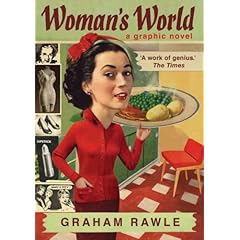
I've been a big fan of Graham Rawle's since Jon bought his novel Woman's World (indeed, I used a quote from the text for a poem) and I promptly purloined it. It's frankly incredible: a sizeable novel composed entirely of collaged text from women's lifestyle magazines and narrated by the wonderfully deluded devotee of such magazines, Norma Fontaine. Worth checking out.

But to the matter in hand. In this edition of Wizard of Oz, Rawle has provided over 100 weird and wonderful collaged images to accompany and enhance the original story, and also to encourage people to read or re-read Baum's tale, instead of simply watching a certain iconic film, which is almost a different story altogether.

One of the best things about the talk, other than hearing about the trials and errors involved (the slideshow of dolls 'auditioning' for the part of Dorothy springs to mind) was the amount of thought the artist had put into breaking away from the film's aesthetic. Take Dorothy's shoes, for example. Most people would demand ruby slippers, but, as Rawle pointed out, when the film came out, many people would have been frustrated not to see Baum's original silver slippers.

With this need to create a fresh frame of reference outside a cinematic classic, Rawle says he deliberately went for images that were 'a bit clunky' and roughly composed. After all, what's the point in competing for slickness against the movie, with its huge budget, legendary status and different format to begin with? You might as well recreate the surreal, sometimes frightening world as it would have been seen by a young girl from Kansas.

The results are enchanting. Toto, whom Rawle sees as a representation of Dorothy's judgement in the film, is portrayed as fairly useless in the original text. Hence him being transformed into a toy dog on wheels. The lion, a second-hand shop find, had the perfect expression but no back legs, so Photoshop replicated his front ones, giving him a slightly wonky, completely endearing look. Other characters, such as the Tin Man, were made from scratch, but using salt shakers and various bits and bobs, to create a collage within a collage.

It struck a chord with what FuseLit aims to do. From fairly early on, we were aware that a) we were never going to look as professional and sleek as many other magazines of this ilk and b) we didn't want to. I hardly look twice at glossies. They leave me a bit cold and they don't suggest much hands-on involvement by the creators, however brilliant the content may be. Hence the stitched up binding that began with CABARET, the masking-taped rough brown envelope and guillotined rusty paper (hand painted - yes, Jon did every one with his own fair paws) used in FOX and the fun and games of machine-stitching the gauze 'lingerie' for NUDE.

Rawle seems to throw himself completely into his work, and yet have immense fun with it. He built, destroyed and rebuilt an entire Emerald City because it wasn't right, but you get the feeling he enjoyed making each version because he got to experiment, interpreting an already vastly imaginative text in his own kooky way.

Even if you think you know the story backwards, this edition is a gorgeous tribute to the original narrative that adds an entirely fresh layer of enjoyment. And frankly, it's chunky, it's hardback and it's outright beautiful.


Further reading: Woman's World

To see more of Graham Rawle's creations and for sneak peaks inside Wizard of Oz, sally forth to http://www.grahamrawle.com/

Monday, 29 September 2008

Hope's Suffering - writing in lieu of a review of 'Linha de Passe'


The film sets it out neatly at first. Loneliness and belonging. On the side of the latter, the crowd at the Corinths football game, and the preacher's congregation. On the former, the boy riding the buses alone, the woman we saw at the game in her bedroom alone as her waters begin to break. The player in the try-outs, whose team-mates are his rivals.

It's not so simple. The church-goer has bought his place in the world at the price of the respect of his peers - nothing but scorn left for the 'bible-boy.' The boy on the buses has his family to go to - but he knows his real father is a bus driver and so he rides in the hope of catching a glimpse. And a motorcycle gregariousness sends him down a road that will end with complete alienation from his fellow human beings.

All of these characters are sited in one family - sons around a single mother in a São Paulo household too small to fit them. Their hopes play off one another and of course come into conflict, inevitably creating tensions in the plot - but they are not how the film moves. Fulfilment or otherwise depends on decisions made in each individual's sphere.

Most moving for me were the moments in which hope's embers faded. A lame legged woman is baptised in the river. The preacher lets her go and commands her to walk - but each time he has to catch her as she falls down into the water. Once he gives up the look of relief is palpable. It's the ending of hope's cruelty, the release of hope's suffering - that which happens when a hope is fulfilled, or put beyond reach.

Friday, 26 September 2008

Brockzilla II


This October is the return of the 'Brockzilla' exhibition in the Broca cafe in Brockley, London, near Brockley train station. They are still looking for submissions of pictures of monsters attacking Brockley by month's end, so if you happen to live in the area there's still time to whizz one off and drop it in, either physically or electronically.

I mention it because last year's Brockzilla was the inspiration for the Foxleigh Battles Death in All Its Forms pictures and computer game featured in Fox. I might try to run something simple off for this one as well, but alas, so little time!

Saturday, 13 September 2008

FuseLit: Mixtape event!


Wonderful Fusettes! We bring glad tidings of great joy, for FuseLit is very proud to present our latest event, Mixtape!

Date: Thursday 23 October
Time: 7pm
Place: The Betsey Trotwood, 56 Farringdon Road, London, EC1R 3BL
Nearest tube: Farringdon
Price: £3


The premise is simple: a fine gaggle of poets have each put together a ten minute selection of their favourite poetry cuts (plus one of their own compositions) and will be performing them live for your delectation. Witness:

Mr Tim Wells
Ms Amy Key
Mr Simon Barraclough
Mr David Floyd
Mr Andrea Tallarita
and Mr Cliff Hammett

all presenting their personal poetry mixtapes. Comperes Jon Stone and Kirsten Irving will also be slipping in their own choices between the acts, the whole event thus taking the shape of one giant, unique live poetry compilation disc quest!

Monday, 1 September 2008

Introducing: the first Fuselit Commemorative Paper Plate!


What’s that, you say?

We're offering a downloadable template for a decorative plate that you can cut out, construct and then proudly display on (a) your mantelpiece (b) your windowsill or (c) the top of your green recycling bin.

The plates are made to commemorate a person or event selected in connection with a previous Fuselit’s spurword, and will be published on a suitably auspicious date. Each plate is lovingly hand PDFed and will be dispatched to you by our diligent team of electronic cyber monkeys simply by clicking the link below:


Download Commemorative Paper Plate #1

The first word used is from Fuselit’s first issue: Demo.

Today is one hundred and twenty-eight years since the birth of Harriet Shaw Weaver. She was a supporter of women’s suffrage (but one wily enough to realise that the vote alone would not be a panacea to all the injustices women face) who later became a Labour party member and then a dedicated communist. ‘Comrade Josephine’ – as she was known – could be seen out on the streets on protests and selling copies of the Daily Worker; that is, when she wasn’t spending her not inconsiderable inheritance to bail out fellow comrades who had been ‘picked up’ by the police.

This was not all she had put her wealth to though – she had been the main financial backer (and company treasurer) for the journal ‘The New Freewoman.’ This later became ‘the Egoist’, and featured some of the most important modernist writers. She had a stint as editor, during which one of her prime achievements was ensuring the serialisation of James Joyce’s Portrait of an Artist as a Young Man – no mean feat considering the First World War was on and he was in Austria at the time. She kept the full extent of her backing a secret, feeling that her unearned income should gain her no personal benefit, whether through gratitude or influence.

In everything she was involved in, she attained a reputation for steadfast reliability and a willingness to take on the unglamorous nitty-gritty that others shy away from. Conversely she avoided the limelight and had little confidence in her own writing. I think she's a fascinating figure, not least because of what her life reveals about the economics of the arts and of politics at the time, and what it means to be a key figure in both without a body of personal artistic achievement or substantial political standing.

There’s an excellent biography by Jane Lidderdale and Mary Nicholson (aka Mary Crawford), which I’d definitely recommend if you want to find out more. I may follow this up with a cut out paper doll of Miss Weaver and maybe a chum or two– watch this space!


Creative Commons License
Fuselit Commemorative Paper Plates #1 Demo: Harriet Shaw Weaver by Cliff Hammett / Fuselit is licensed under a Creative Commons Attribution-Share Alike 2.0 UK: England & Wales License.

Click here to download a jpg version, which should be easier to edit if you so desire.

Sunday, 10 August 2008

The Shuffle/Utter! Dalston


We have some upcoming shows. On 30th August, I'll be performing at The Shuffle. All the information you need is in the picture below. I'll be performing poems from a particular narrative sequence that follows the adventures of Caligula after he evades assassination by means of involuntary, spontaneous time travel.

One day later, 31st August, Kirsty will be reading at Utter! Dalston. All the information you need is here. If you can't be bothered to click that link, it's a 5pm start, costs £5 and takes place at the Arcola theatre, 27 Arcola Street, London, E8 2DJ. Interesting fact: The photo they've used in the poster was taken by my sister, under instructions from me. For some reason, at the time I thought it would suit Kirsty to have roses in her face and a shed in the background. Poor K.


Publish and be Damned *2*


Further to our previous post on the Publish and be Damned event, here are some photos of us and the Arts Pneumonia stall. In the red wig is Kirsty, in the branded t-shirt is me, manning the stall is Arts Pneumonia editor Jet Payne, and browsing the publications is Jody Porter, editor of Zafusy and curator of 14 Hour.

All photos courtesy of Jet, since we forgot our cameras.


Tuesday, 5 August 2008

Wall-E: a prose poetry review


For the past two weeks, I've been afraid a robot would break my heart. Ever since the trailers and the hopeful, inquisitive offering of a name. The correct spelling to recreate this, we have concluded, is “WaaaAAllee”.

Sure enough, despite fierce parries against tears at the absolutely lonely little roller's fate, I sat beeling like a stabbed water main by the end, grateful for the long credits and dim lights.

The things you can do with inferred eyes, bleeps and the clasping and unclasping of metal fingers.

Wall-E is already making number one in top movie robot lists. He is slapstick goof, tenacious underdog and affectionate, upbeat hero in one, and though his situation is almost painful in its desolation, Pixar never let Wall-E feel sorry for himself. No turn to the audience, no sad eyes and upturned palms, imploring them to join him in an “awwww” chorus. He just gets on with it, and once he finds his “Eeeevvaaa”, Wall-E risks everything without even running it past his processors first.

Many Short Circuit fans have complained that Wall-E is a straight skim of Johnny 5, compacted into loveable stumpiness, much as the bot himself crushes Himalayas of trash, before arranging them into towers as high as a doomed game of Tetris. While there is a likeness, this seems an odd critique. But then, most robots believe Ed Norton is a rip-off of the design mould used for Brad Pitt.

The humans, the humans. Odious and occasionally likeable. Some problems with the biology, and yes, better before we met them. Nice in-jokes and references to sci-fi leviathans like '2001: a Space Odyssey' – a nod to adults that it's OK to like this.

Disney does not do apocalypse. Disney had not done apocalypse till Wall-E. Being Disney, they had to sugar the pill with optimism, but honestly, I think I needed that, so as not to melt like Dorothy's witch, or fold to the floor in a ball. 'Wall-E' got me like 'Flowers For Algernon' got me, and yanked out a surprising scarf-string of emotions for such a short film. And while I respect cockroaches, I've never felt tender towards one before.

Monday, 4 August 2008

Published and be Damned and The Arts Pneumonia


Yesterday Kirsty and I went along to Publish and be Damned, an annual fair for independent arts publications held at the Rochelle School in Shoreditch. It was packed with Xeroxed or home-printed 'zines, bumper glossies, broadsheets and books, plus branded bags, badges, t-shirts and other tantalising extras. Generally geared more towards the alt, avant-garde and visual arts side of things (which can, admittedly, become a little exhausting) there was nevertheless much to keep the two of us hooked and we came home with a good haul of treasures. We caught up with Impulsive Random Platform, each issue of which is produced with a different twist. The latest comes with a free DVD (and the option to attend a free screening), while number 7 is a fold-out screenprint poster edition. We also bought a copy of Emitron, 'an occasional micropaper', and Donkeyhead, a smartly produced comic by Daniel Baker.

Fuselit didn't have a stall of its own, but Jet Payne of The Arts Pneumonia kindly offered us a space on her stall, and we sold a few more copies of Fox. It's only fair (no pun intended), therefore, that we feature The Arts Pneumonia on Cut Out & Keep.

Inspired by Dada publications and produced in sumptuous A4 size, The Arts Pneumonia shares its origins with Fuselit, beginning life on the campus of the University of East Anglia and then moving to London. Jet and Jessica Warde were the founders, and the journal is now edited by a team of five with a large array of contributors. The content is altogether eclectic, centering around visual art and the accompanying articles, reviews and interviews but also incorporating poetry and creative prose. Other elements are too distinct to sum up; the latest issue, for instance, has a feature on 'soullessness' made up of reader's emails and contributions.

The Arts Pneumonia also maintains strong links with other journals and for Publish and be Damned, they produced five special edition issues curated by the likes of Jody Porter at Zafusy, featuring a wide variety of content. It's worth keeping a close eye on them, if for no other reason than you might miss out on limited extras like these and because their range of ambition speaks volumes.

Saturday, 26 July 2008

Kirsten Irving Double-Bill


Fuselit's editor, Kirsty, will be on stage twice today. She's performing at 14 Hour: Afternoon Mutiny, which starts at 3.00pm at St Aloysius Social Club, 20 Phoenix Road, NW1, London. Then, at 7.30pm, there's The Shuffle, hosted in the Studio at The Poetry Cafe on Betterton Street, London again. Works she'll be performing include BangBangSuperGun, Orniphobic roundel and What possess someone to get Myra Hindley and Ian Brady portrait tattoos.

Come soon, come quick, concomitant.

Wednesday, 23 July 2008

Where have we been?


The entire Cut Out & Keep posse has been on holiday to Cornwall, where we barbecued on the beach, watched hawks, gorged on cream tea and ice cream, walked along clifftop paths at night and attempted to reconstruct the various broken pieces of board games we found in a cupboard in the cottage we were staying in. I should perhaps have mentioned this before we went. What's important, however, is that we are back and planning future content, as well as beginning to put together Fuselit: Aquarium with a September release in mind. The deadline for submissions is up! However, we are now calling for submissions for Fuselit's 14th issue, which will be entitled Mars. Full submission guidelines here.

Things to look out for on this blog in the near future:
  • More poet top trumps.
  • A 'behind the scenes' look at the Fuselit sweatshop.
  • Another back issue of Fuselit rendered as a Make-Your-Own version. This time it will be issue 2, Catapult.
  • More poetry reviews.
  • Commemorative paper plates (possibly).
  • A downloadable, printoffable adventure board game as a build up to the launch of Aquarium.
  • Information about forthcoming shows Kirsty and myself will be performing at.
Keep your ear to the ground!

Sunday, 6 July 2008

Plagiarism begins at home


Plagiarism is the bane of any school or university faculty's life, with special officers often assigned to weed out the copy'n'paste brigade and shoot on sight. One lecturer, in fact, told us straight up in week one not to bother because this was her job and she was very, very good at it. So it was with some trepidation, two years ago, that I suggested to my dissertation supervisor I might want to plagiarise for my poetry project.

The idea for Covering Tracks came from an excellent poetry class taught by Daniel Kane, in which Ted Berrigan and his Final Sonnet reared their cheeky heads. In case you're not familiar, Berrigan rounds off his collection of sonnets by lifting and appropriating chunks of another text, dropping them into his poem without a hint of acknowledgement. Not just any old obscure text either. What's one of the most famous fictional closings you can think of? Try Prospero's final speech from The Tempest.

A Final Sonnet
For Chris

How strange to be gone in a minute! A man
Signs a shovel and so he digs Everything
Turns into writing a name for a day
Someone
is having a birthday and someone is getting
married and someone is telling a joke my dream
a white tree I dream of the code of the west
But this rough magic I here abjure and
When I have required some heavenly music which even now
I do to work mine end upon their senses
That this aery charm is for I'll break
My staff bury it certain fathoms in the earth
And deeper than did ever plummet sound
I’ll drown my book.
It is 5:15 a.m. Dear Chris, hello.

My favourite part is that the content reflects the means. Prospero is surrendering his staff and magical powers, giving up ownership of the island he had appropriated himself only a few years previously. The text in turn is given up to the winds. Yes, granted, Berrigan had little cause to fear Shakespeare's lawyers in the 1960s, but still, a bold move, considering how canonised Shakey is in literature.

Like Berrigan, I wanted to take phrases I liked straight out of other texts and mutate them to my own ends. I decided to use each as the title of a poem and start from there (now you're seeing where FuseLit's spurword schtick originated - I get ridiculous writer's block). Luckily my supervisor was sympathetic and I lived to graduate.

In the age where you can download movies which haven't yet waved a hanky to the cinema (sure, it's illegal but with broadband and a market nothing can stop it), or spoof mercilessly on YouTube, theft of material and plagiarism is all around. Sometimes this is detrimental to the original ,but a lot of the time, it's also very fertile and the 'cutting' taken from the original can become a distinct piece on its own. There's something reassuringly familiar in spotting the reference, but which allows for alienation, comedy, shock or intrigue when the differences begin to manifest themselves. Sometimes it has the effect of an in-joke we're actually in on, sometimes, as in Freud's notion of the uncanny, it's the unfamilar in the familiar that can spook us.

It's also, of course, always satisfying to see the stale notion of The Author get unseated from its plinth. I'm not talking about simply copying the text verbatim and cashing in, but instead about cutting and rearranging, discarding bits, refreshing the material, sampling, trimming, inserting, juxtaposing and collaging. The Lars Ulrichs of this world, precious about their material to the point of Scroogedom, should probably realise that it has to leave the nest to get noticed, and that somewhere along the way, someone else might have a use for it that you didn't intend, but which could prove awesome.

*************************************************************************************

As a sidenote, but not completely unrelated, The Forest just closed submissions for their Stolen Stories project. Hopefully they'll be running another soon. We'll keep you posted.